Last updated October 15, 2026




Free written scope consultation - allowances, timeline, and change-order rules on paper before a single trade is scheduled
Seasonal Construction Care for Fort Lauderdale: Year-Round Homeowner’s Guide
The costliest repairs in Fort Lauderdale homes typically aren’t caused by the hurricane itself. They’re caused by the moisture that enters through a small post-storm gap and goes undetected through the dry season until it becomes a mold remediation project. A quarter-inch crack in window sealant, a lifted roof flashing, a soffit fastener that worked loose during 90 mph gusts: each one lets water in slowly, quietly, for months. By the time you see the ceiling stain or smell the mildew, the structural damage behind the drywall has been compounding since autumn. This guide walks through the two real seasons that govern home construction in Fort Lauderdale: hurricane season from June through November, and the dry-season compression that follows from December through May, when materials shift, gaps open, and the bill for deferred attention comes due.
Styles & brands we work with





Quick Answer
Seasonal home maintenance in Fort Lauderdale means running a contractor-grade pre-hurricane checklist between March and May, doing a 24/72-hour/2-week post-storm inspection after any named storm, and using the dry months to fix the expansion-and-contraction damage that the humidity cycle causes every year. The single most important habit is closing small envelope gaps within weeks of them opening, because Fort Lauderdale’s rain and salt air turn any opening into a mold and rot pathway faster than homeowners expect. The dry season is not the off-season: it is the repair window.
Table of Contents
- Fort Lauderdale Doesn’t Have Four Seasons: It Has Two That Matter
- Pre-Hurricane Season Checklist: What Contractors Actually Check in March Through May
- The Dry-Season Shift: Expansion, Contraction, and Where Gaps Appear
- Post-Storm Protocol: 24 Hours, 72 Hours, and 2 Weeks
- Fort Lauderdale’s Brief Winter and the HVAC Systems That Run All Year
- Landscaping, Drainage, and What Your Yard Is Telling You About the Slab
- Common Mistakes to Avoid
- When to Call a Professional
- Frequently Asked Questions
- The Bottom Line
Fort Lauderdale Doesn’t Have Four Seasons: It Has Two That Matter
In the Northeast, seasonal home care means gutters in October, ice dams in February, and exterior paint in May. In Fort Lauderdale, that calendar is meaningless. What matters here is a two-window cycle that repeats every year with the reliability of the tides: a six-month wet season when wind, rain, and pressure test every seam in the house, followed by a six-month dry season when the building envelope shrinks, dries, and reveals every weakness the wet season created. We’ve worked on homes across Fort Lauderdale since 2004, and the pattern we see in nearly every neighborhood, from Victoria Park to Rio Vista to Imperial Point, is the same: the damage happens in one window and becomes visible in the other. That gap between cause and discovery is where costs multiply.
The wet-season months, officially June 1 through November 30, bring an average of 60-plus inches of rain to Broward County. That’s more than double the national average, and it arrives in concentrated bursts. A typical afternoon thunderstorm can drop two inches of water in thirty minutes. Meanwhile, the dry season, roughly December through May, drops to less than three inches per month. That swing from saturated to parched is not just weather; it’s a loading and unloading cycle on every material in the house: concrete slabs, stucco, exterior trim, tile, roof membranes, sealant joints. Building materials in Fort Lauderdale are chosen partly for this cycle, but no material handles it indefinitely without inspection and maintenance. The house moves. The question is whether anyone is watching where it moves.
Understanding this two-season reality changes the maintenance calendar entirely. It is not about servicing the AC in spring and checking the chimney in fall. It is about preparing the envelope before the wind arrives, documenting any damage immediately after it passes, and using the dry window to complete repairs before the next round begins. Homeowners who internalize this cycle spend less money on construction care than those who treat home maintenance as a quarterly chore list. And they catch problems small, when fixing them is a one-day job, not a six-week remediation project. This is the framework the rest of this guide fills in, with enough specificity that you can run these checks yourself or know exactly what to ask a contractor to inspect when you bring one in. For more guides & resources, see our blog.
For homeowners who want a professional pair of eyes on these seasonal rules, Mason Remodeling Co Fort Lauderdale has been serving Fort Lauderdale homes since 2004. We assess the entire home as a connected system, not a list of isolated parts. That is the only way seasonal care works here: the roof ties into the soffits, which tie into the window seals, which tie into the drainage plane, which ties into the slab. Miss one link and the chain fails somewhere else.
Pre-Hurricane Season Checklist: What Contractors Actually Check in March Through May
If a hurricane hits Fort Lauderdale in September, the repairs that determine how your home survives were made in April. March through May is the window when materials can be inspected, ordered, and installed before the June 1 start of the official season. Waiting until a named storm is three days out means competing with every other homeowner for materials and labor, and paying premium prices for rushed work. A contractor-grade pre-season checklist runs through the entire envelope in a specific order, because failures cascade: a roof problem becomes a soffit problem, which becomes a wall problem. We run this list on hundreds of Fort Lauderdale homes each spring, and the items below are the ones that actually find damage, not the theater of checking a smoke detector battery.
- Roof tie-downs and structural connections. The goal is not just to keep water out but to keep the roof on the house. In Broward County, code requires specific uplift capacity on every truss-to-wall connection. Over time, corrosion from salt air weakens the straps and clips. We look for rusted hurricane ties, loose anchor bolts, and any roof that shows signs of movement from prior storms. This is a contractor inspection, not a visual check from the ground.
- Roof covering and flashings. Loose tiles, lifted shingles, cracked ridge caps, and exposed fasteners let wind get under the roof covering and peel it away. PGT and Atlas both manufacture roof-adjacent products rated for this region’s wind loads, but even the best materials fail at the flashing joints first. We check pipe boots, chimney flashings, valley metal, and gutter-to-fascia connections. A lifted pipe boot is a slow leak that becomes a ceiling collapse during the next wet season.
- Impact window and door seal integrity. Fort Lauderdale building code mandates impact-rated glazing or shutters on new construction, but the sealant around those frames is a wear item. We check the perimeter caulk, the glazing beads, and the weatherstripping on every operable window and door. A window rated to 140 mph does nothing for water intrusion if the sealant bead has cracked and separated from the stucco. We also check the edge seals for delamination or milkiness in the glass itself, which is a sign the laminate is beginning to fail.
- Soffit and fascia fastener security. Soffits are the underbelly of the roof overhang, and they take enormous wind pressure. In Fort Lauderdale, soffits installed with staples or nail guns, common in production building from the 1980s through the 2000s, are a known failure point. We look for sagging panels, popped fasteners, peeling paint that indicates water behind the panel, and any gaps where the soffit meets the exterior wall. A missing soffit panel in a storm is not just a repair item: it becomes a wind-driven water intrusion point directly into the attic.
- Exterior sealant joints everywhere. Every penetration through the exterior – hose bibs, electrical conduits, cable lines, dryer vents, bathroom fans, floodlights – is sealed with caulk or exterior sealant that degrades in UV and salt air. We run a utility knife along the bead to test adhesion. If it pulls away, it is time to cut it out and recaulk. In our experience, these small penetrations are the single most common source of slow leaks in Fort Lauderdale homes.
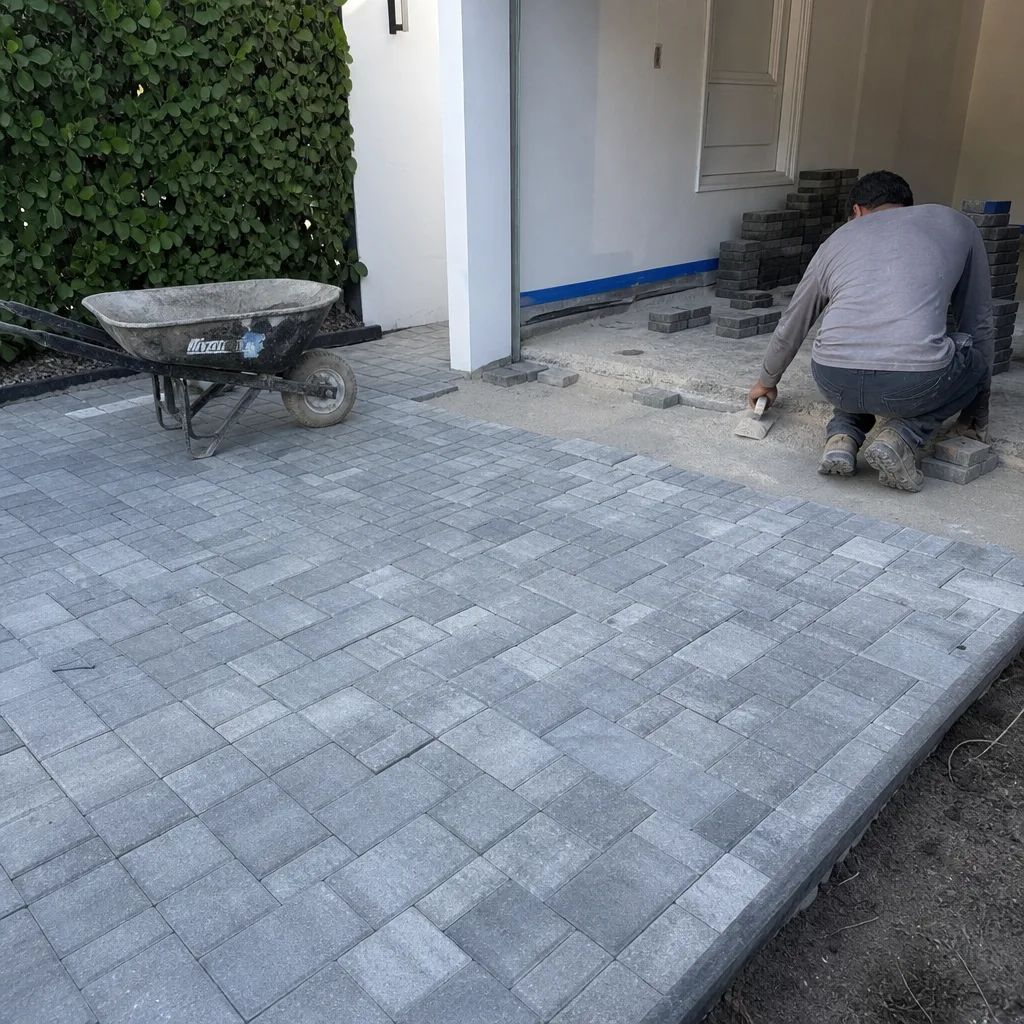
- Drainage verification. Before the rains come, the water needs a path away from the foundation. We check gutters for slope and tightness, downspouts for blockage, French drains for outflow, and the final grade around the slab for negative slope. A downspout that dumps water at the corner of the house is a slab-settlement driver over multiple wet seasons. Boral and Belgard hardscaping products, when used for patios and sidewalks, should be checked for settlement that redirects water toward the structure rather than away from it.
Each of these checks is simple in isolation, and the whole list takes a professional crew less than a day on a typical Fort Lauderdale home. The value is not in the individual items; it is in running them before the June 1 start date, when there is time to fix what the check finds. If you prefer to have this done for you, a General Contractor in Fort Lauderdale can run the full pre-season inspection and produce a written scope of any items that need attention. That written scope becomes your prioritized punch list, not a verbal, “everything looks fine.”
One more thing worth stating plainly: the March-to-May window is also when contractors’ calendars in Fort Lauderdale fill up fastest. Starting your pre-season check in April means materials are still available at normal lead times. Starting in late May means waiting two weeks for the same impact glass or the same roof flashing, and if a storm forms in the Atlantic while you wait, the job either gets delayed or rushed. Neither is good for the house.
The Dry-Season Shift: Expansion, Contraction, and Where Gaps Appear
Every material in a Fort Lauderdale home expands and contracts with moisture and temperature. The dry season, December through May, is when relative humidity drops from the 85-95% range of summer into the 50-70% range, and daytime temperatures swing from the 80s down into the 50s and 60s during cold fronts. That swing is modest by northern standards, but it is enough to move materials that are installed to tight tolerances. The result is predictable and visible each year, and it is the source of more defensive maintenance calls in Fort Lauderdale than hurricanes. Here is where the movement concentrates and what to do about it in the maintenance window from December to March.
Caulk and sealant failure. Exterior caulk joints are the flex joints of the house, and they crack first. Every joint between dissimilar materials – stucco to window frame, tile to siding, wood trim to block – is a location where two materials expand at different rates. During the dry season, the caulk bead stretches as the materials contract, and beads that are more than a few years old lose elasticity and split. The fix is to remove the old bead completely and recaulk with a high-quality exterior sealant rated for this climate. In Fort Lauderdale, we recommend checking these joints every dry season, because the wet season that follows will push water into every crack with hydraulic pressure. This is also the time to inspect interior caulk at tubs, showers, and backsplashes; the same shrinkage cycles open hairline gaps that send water into wall cavities and cabinet bases.
Tile grout cracking. Tile floors in Fort Lauderdale are laid over concrete slabs in most homes, and concrete expands and contracts with moisture. During the dry season, the slab shrinks slightly, which transfers the movement to the tile above. Grout lines are the sacrifice joint, and they crack in predictable patterns: along the longest continuous runs, at transitions between rooms, and around door thresholds. Small hairline cracks are cosmetic. Cracks wider than a nickel, or tiles that sound hollow when tapped, mean the tile has debonded from the slab and the repair is more involved. The dry season is the right time to address grout work, because the slab is stable and the new grout cures properly before the next humid cycle arrives. For homes undergoing a Bathroom Remodeling in Fort Lauderdale, this is why we specify movement joints, the soft silicone joints that allow slab movement without cracking tile, at every critical transition.
Exterior paint delamination. South Florida paint fails differently than paint in other climates. Instead of peeling from ice and frost, it blisters and separates from the substrate due to trapped moisture, salt, and UV. During the dry season, the failure becomes visible: bubbles under the paint surface, chalky residue on the hand, peeling at the eaves and fascia. This is the time to diagnose the failure and repaint, because the dry-season surface is stable enough to hold a new film. The key is fixing the moisture source first. Painting over a leaky soffit or a failed window seal means repainting in two years, and the new paint just traps the moisture faster. For Fort Lauderdale homes, we also see delamination concentrated on the east and southeast elevations, which take the full brunt of morning sun and salt-air spray.
Door and window operation. Wood doors and wood jambs swell during the wet season and shrink during the dry season. That is why a door that sticks in August may have a visible gap at the weatherstripping in January. If the gap is small and the door still latches, it is within normal range. If the gap is wide enough to see daylight or feel airflow, it is time to adjust the hinges or threshold. The dry season is the ideal time for this work, because the adjustments will remain correct through the next wet-season swell.
The unifying rule of the dry season is this: the house is in its most stable configuration, and that is when repairs hold. Every movement-related issue found in December through March should be addressed in that same window. Wait until May and the materials are already swelling again, making the fix less durable.
Post-Storm Protocol: 24 Hours, 72 Hours, and 2 Weeks
Every Fort Lauderdale homeowner needs a post-storm routine, and it should be broken into three time windows: the first 24 hours, the next 72, and the two weeks that follow. Each window has a distinct purpose, a distinct set of actions, and a distinct line between what a homeowner can assess and what requires a licensed contractor. The goal in each window is not just to document damage but to prevent the secondary damage that turns a modest repair into a major one. Water left in a wall cavity for two weeks in Fort Lauderdale’s climate is a mold colony. The process below is the one we walk homeowners through after every significant weather event in Broward County.
First 24 Hours: Safety and Documentation
The first day after a storm is not for repairs. It is for making sure the house is safe, stopping any active water intrusion, and creating a documentation trail. Do not climb onto the roof during this window, even if you see missing shingles. The roof may have structural damage that is not visible from the ground, and a fall during post-storm conditions is a preventable injury.
- Check for active water entry inside the house. Look at ceilings, window frames, door thresholds, and baseboards. If water is actively entering, place a small bucket and a towel to contain the spread, but do not puncture the ceiling to release water buildup unless it is actively sagging and threatening to collapse. A sagging plaster ceiling can be drained with a small screw hole at the lowest point, but if you are unsure, wait for a contractor.
- Photograph everything. Use a phone camera and take wide shots first, then detailed close-ups. Document wet spots, cracked drywall, lifted shingles from the ground, downed fences, and any exterior damage. Take the same exact photos again 48 hours later to show progression. This documentation is what insurance adjusters and contractors will use to scope the work.
- Do a ground-level exterior walk. Look for downed power lines, which you should report to FPL and treat as live and dangerous. Look for lifted roofing material, missing siding, cracks in the stucco, and any tree limbs touching the roof or walls. Photograph each of these as well.
- Do not begin DIY repairs beyond tarping or temporary covering. The weeks after a storm are when unlicensed contractors flood Fort Lauderdale neighborhoods with low bids and no paperwork. Accepting that work creates a second disaster on top of the first. We will return to this in the Common Mistakes section.
72 Hours: Moisture Management and Contractor Mobilization
By 72 hours after the storm, the acute phase is over, but the secondary damage phase is just beginning. Water that soaked into the building materials has not dried, and Fort Lauderdale’s post-storm humidity usually stays in the 80-90% range, which slows natural drying. The goal in this window is to bring in professional eyes and start the drying process.
- Contact your insurance company. Report the damage, ask about their post-storm inspection timeline, and ask what documentation they want before you begin any repairs. Do not start repair work that could be a covered claim without understanding the insurer’s process first.
- Run a moisture meter over suspected wet areas. If you have one, a basic pinless moisture meter will tell you whether the wall behind a wet spot is saturated or just surface-damp. If you do not have one, a reputable contractor will. Readings above 20% in drywall or wood mean the material needs drying or replacement.
- Get a contractor to do a roof and envelope inspection. The 72-hour mark is the right time to have a licensed, insured, and bonded contractor walk the roof and inspect the full envelope. The goal is a written damage scope, with photos and line items, that you can compare against the insurance adjuster’s scope. We provide this in Fort Lauderdale on every post-storm inspection, and the written scope is yours to keep regardless of who does the repair.
- Start dehumidification inside the house. Run dehumidifiers in any room that took water, run the air conditioner on the dry setting if available, and keep interior doors open so air circulates. Closing off wet rooms makes mold more likely.
Two Weeks: Full Assessment and Repair Planning
By two weeks, the full extent of the damage is visible, and the repair scope is clear enough to bid. Any water that has not dried by this point is a mold risk, not a drying project. This is also the window when storm chasers and unlicensed crews are most active in Fort Lauderdale neighborhoods. The two-week mark is when homeowners get taken advantage of, and it is worth being deliberate here.
- Compare the insurance scope with the contractor scope. If the adjuster missed something, submit a supplement. If the contractor’s scope is wildly larger, ask for photos and justification. A trustworthy contractor’s scope is built from photos and measurements, not from a drive-by.
- Prioritize the envelope before interior finishes. Roof, soffits, windows, flashing, and drainage get fixed first. The drywall and paint happen after the water has stopped entering. This seems obvious but it is skipped constantly, and the result is interior damage recurring within a year.
- Get a written, line-item price before approving any work. This is the standard we hold at Mason Remodeling Co Fort Lauderdale on every project: a written price before any work begins. Not a verbal estimate, not a handshake number. If a contractor will not put a price in writing, do not let them start.
The post-storm protocol becomes automatic after the first season. The important thing is that it exists before the storm, not the day after. If you want the full walkthrough as a printed checklist, ask us for one when you call. We are happy to share the same list we have used on Fort Lauderdale homes for over two decades.
Fort Lauderdale’s Brief Winter and the HVAC Systems That Run All Year
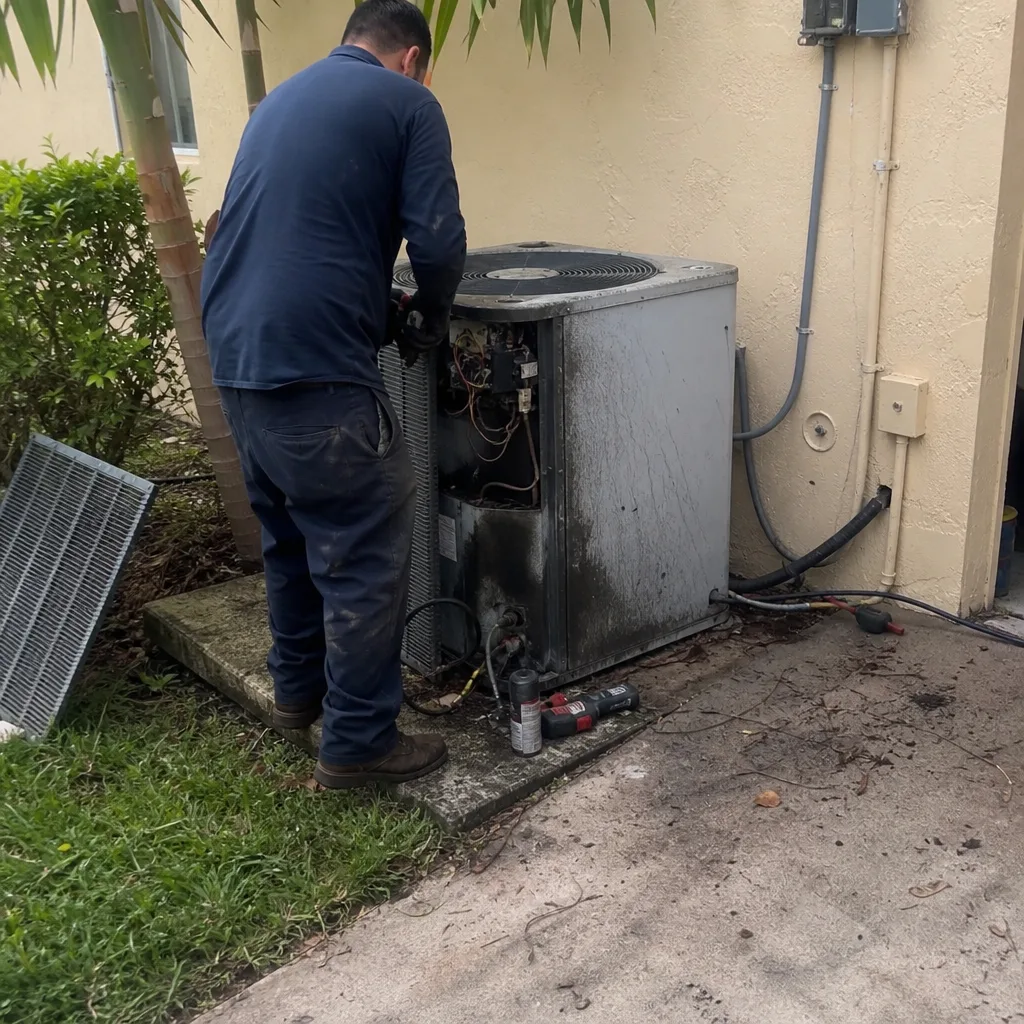
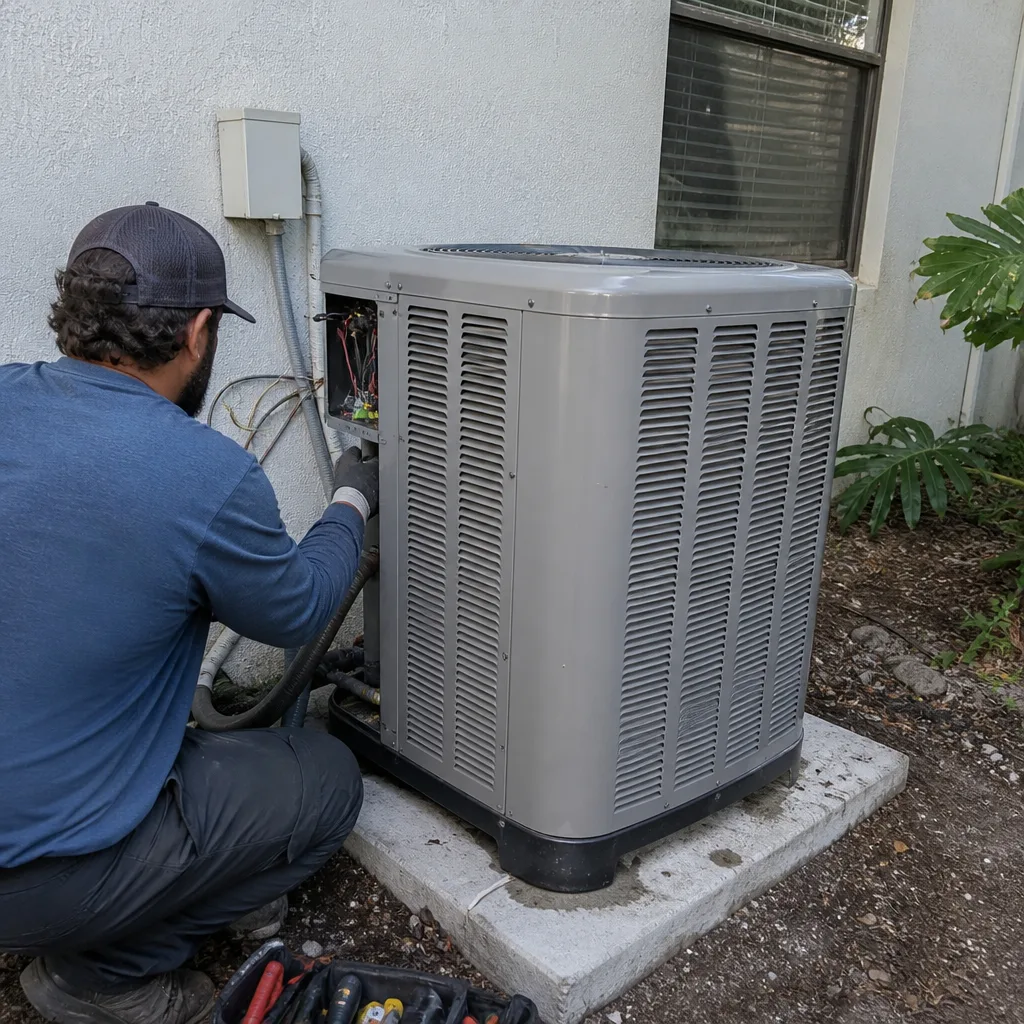
In most of the country, HVAC maintenance is a fall chore before the heating season. In Fort Lauderdale, the system runs cooling mode effectively year-round, with only brief heating callouts during the handful of cold fronts between December and February. Because the system almost never rests, the maintenance schedule is not seasonal in the conventional sense; it is a continuous wear issue that most homeowners ignore during the months when the system is working well. The one maintenance step most people skip because it feels unnecessary in a warm climate is drain line and condensate pan service, and skipping it is the most common cause of avoidable water damage we see in Fort Lauderdale attics and interior closets.
Every air conditioning system in South Florida produces condensate, usually five to twenty gallons a day depending on the size of the house and the outdoor humidity. That water flows through a small PVC line to a drain, usually in a bathroom, the laundry room, or exterior. Over time, the line clogs with biological growth, which thrives in the warm, dark, wet environment. When the line clogs, the water backs up, and the safety float switch may not trip, especially if the switch itself has corroded. The water then overflows into the drain pan, which may or may not drain to the exterior, and from there into the ceiling, the wall cavity, or the floor. In a Fort Lauderdale attic, where AC air handlers are frequently installed, an overflowing pan means the ceiling below is taking on water. By the time the stain appears, the drywall is saturated and the insulation above it is holding moisture.
The maintenance step, which takes a technician about thirty minutes, is to flush the drain line with a mild cleaning solution or compressed air, inspect and clean the drain pan, verify the float switch is operational, and check the slope of the line. We recommend this twice a year in Fort Lauderdale: once in April before the peak summer humidity, and once in October as the wet season ends. The cost is modest compared to the cost of even one ceiling repair, and it is the closest thing to free insurance an HVAC system offers.
The other winter-specific item is the heat strips or heat pump. Fort Lauderdale homes use heat strips in air handlers or heat pump systems, and both rely on the same ductwork and blower as the cooling side. When the cold fronts come, the system reverses for heat, and any clogged filter, dirty coil, or failing strip limit switch shows up as a system that runs constantly without warming the house. The fix is usually a filter change and a coil cleaning, not a major repair, but it feels like a major repair when the house is 58 degrees at midnight and the thermostat is set to 72. Getting the system serviced in November, before the first real front, costs less than an emergency call during the third night of a cold snap.
The final point is about the effect of the dry season on the building envelope as it concerns HVAC. When the house shrinks in December and January, the gap around ducts, chases, and exterior wall penetrations opens slightly. Conditioned air leaks into the attic and the exterior, driving up the cooling load at the exact moment the system is working hard in the mild weather. It is a small inefficiency, but over the course of a Fort Lauderdale summer, a small leak moves real money. Sealing these penetrations is an afternoon of work with spray foam and caulk, and it fits naturally into the same December-to-March window we have covered throughout this guide.
For homeowners who want a general contractor to look at the whole house as an integrated system, including the interactions between the HVAC, the envelope, and the drainage, the Home Remodeling in Fort Lauderdale page on our site covers how we approach these comprehensive assessments. No single trade sees the whole picture; that is a general contractor’s job.
Landscaping, Drainage, and What Your Yard Is Telling You About the Slab
The link between landscaping and construction integrity is invisible until it is not. In Fort Lauderdale, roots grow year-round, water moves through sandy soil differently than it moves through clay, and the water table is often within a few feet of the surface. The yard is not decoration around the house; it is the active drainage system for the foundation, and it is the first place slab and footing problems show up, usually months or years before any visible crack appears inside. Standing water and root intrusion are the two signals to watch.
Standing water patterns. After a heavy rain, walk the perimeter of the house. Water that stands within five feet of the foundation for more than a few hours indicates a grade problem or a drainage failure. In Fort Lauderdale, this happens when the original grading settles, when a neighbor’s new construction changes the sheet flow of water, or when hardscaping is installed without the correct slope. The water works its way under the slab edge, which erodes the supporting soil and creates differential settlement. That settlement manifests as interior drywall cracks near door headers, doors that stick seasonally, and tile that cracks along lines parallel to the exterior wall. The fix at the yard stage is usually a re-grading, a surface drain, or a French drain. The fix once the slab has settled is a slab-jacking or underpin, which costs more by an order of magnitude.
Root intrusion. Fort Lauderdale is home to mature ficus, oak, and palm root systems that can span twice the width of the canopy. Roots seek moisture, and a house with a persistent leak or a water-retention problem near the foundation becomes a root target. Roots find the water, grow into the hairline crack in the slab or the footing, and widen it. The warning signs are the same as standing water, plus visible roots below the soil line when you dig a small test hole near the foundation. The solution almost always involves separating the tree from the structure: root barriers, selective root pruning, or tree removal in severe cases. This is not landscaping work in the conventional sense; it is structural protection. We have worked on Fort Lauderdale homes where a single ficus root had lifted a corner of a patio slab and cracked an adjacent footing, and the earlier that root intrusion is caught, the simpler the remediation.
The drainage-to-construction chain. Every downspout, gutter, and surface drain is a link in the same chain that protects the foundation. When any link fails, the system redirects water to the weakest point, which is usually the slab edge. The pre-hurricane checklist covered this from the roof perspective; from the ground perspective, the same issue matters just as much. We recommend walking the drainage chain after every significant rain, not just after storms. Look at where the water leaves the downspout, where it flows across the yard, and where it exits the property. If any part of that chain is not moving water away from the foundation, the repair is always cheaper the day before it fails than the day after.
The dry season is the right time to inspect drainage and landscaping. The ground is dry, the water table is lower, and the soil conditions reveal the drainage patterns more clearly than during the rainy season. It is also the time when roots are actively seeking moisture from any source, including a slow leak under the slab. If you have a PGT impact window that is not the issue, a Tamko or Boral roofing material that is holding up fine, but a yard that floods at the foundation line, the expensive problem is not on the roof; it is under your feet. Spend the inspection time on the ground.
Common Mistakes to Avoid
- Checking the roof only from the ground. Most roof damage in Fort Lauderdale is not visible from the ground. Tile that is shifted, flashing lifted, and sealant failure happen at the ridge and the penetrations, and they need eyes on the roof surface to find. A ground-level look is better than nothing, but it is not an inspection.
- Ignoring small sealant cracks. A hairline crack in exterior caulk lets water through during a two-inch-per-hour storm. In Fort Lauderdale’s climate, that moisture does not dry out on its own. It sits in the wall cavity and becomes mold. Small cracks are the highest-ROI repair in home maintenance, and they are the easiest item on this list to put off.
- Waiting until a storm is named to do pre-season work. In the days before a hurricane makes landfall, contractors in Broward County are overwhelmed, materials are allocated, and prices rise. The pre-season window closes in May. Waiting until a storm is three days out means the work will not get done before the wind arrives.
- Accepting a verbal estimate or a “we’ll see once we open it up” quote from a storm-chasing contractor. The weeks after a storm are when unlicensed crews move through Fort Lauderdale neighborhoods offering cash deals and vague numbers. If the price is not in writing, it is not a price. This is not caution; it is self-protection.
- Repainting over moisture problems. Exterior paint failure in Fort Lauderdale usually has a moisture cause behind it. Repainting without fixing the leak traps the water and accelerates the failure. Find and fix the moisture source first, then paint.
- Ignoring the condensate drain line. The most common avoidable water damage in Fort Lauderdale homes is an overflowing AC condensate pan. The fix is simple and the damage is extensive. Twice-a-year drain line service is not a luxury; it is a maintenance baseline given the climate.
- Treating each trade as a separate system. The roof, the drainage, the slab, and the AC all interact. A foundation crack and a roof leak can share the same root cause: a downspout that pours water at the foundation line. Isolated fixes address the symptom. Integrated inspection addresses the system.
When to Call a Professional
If the roof has visible damage after a storm, the ceiling shows water staining, the slab is cracking in a pattern that continues to widen, or the AC drain pan is overflowing into the ceiling, this is not DIY territory. High-tension forces, heights, electrical components, gas lines, and structural footings require a trained professional who is licensed and insured, and who carries the liability for the work. Any of these conditions left unaddressed in Fort Lauderdale’s wet climate becomes a compounding problem.
Mason Remodeling Co Fort Lauderdale offers free estimates in Fort Lauderdale for general contracting, home remodeling, and seasonal construction care assessments. Call (754) 354-3720 and a live person answers, 24 hours a day, seven days a week. Before any work begins, you will receive a written price. Every technician who arrives at your door is background-checked, identity-verified, in a clean marked uniform, and introduced to you by name and photo before the visit under the Threshold Standard. That is not a promotional claim; it is the operating procedure on every job.
Every project we complete is covered by a written guarantee with clearly stated terms, and our 365-Day Done Right Promise applies across all general contracting, bathroom remodeling, and whole-home remodeling work. If the work is not right within a year of completion, we make it right at no cost to you. We invite you to call for the pre-season walkthrough, the post-storm inspection, or the dry-season punch list, and get our professional assessment of your Fort Lauderdale home before the next season starts. You can also check the Mason Remodeling Co Fort Lauderdale home page for an overview of our services and standards.
Frequently Asked Questions
Hurricane season in Fort Lauderdale runs from June 1 through November 30 every year, and preparation should start no later than March. That gives you the full March-through-May window to inspect the roof tie-downs, window seals, soffit fasteners, and drainage, order any needed materials at normal lead times, and complete the work before the season begins. Preparing in March means the work is done by Memorial Day; preparing in May means competing with every other homeowner for the same labor and materials. Call (754) 354-3720 to schedule a free pre-season walkthrough.
A practical Fort Lauderdale schedule is a pre-hurricane envelope check every spring, a post-storm inspection after any named storm, an AC drain line flush twice a year, and a dry-season movement check in January or February for caulk, grout, and paint. That amounts to four to six intentional maintenance touchpoints per year. The cost of running these checks is a fraction of the cost of the failures they catch, and most items found during these checks are quick, inexpensive fixes.
Yes, in one specific way: the combination of salt air, high year-round humidity, and a water table that sits close to the surface. Salt air accelerates corrosion on fasteners, strapping, and flashing. High humidity means moisture that enters the building envelope does not dry on its own, so small leaks become mold problems quickly. And the high water table changes how drainage and slab settling behave compared to inland Florida cities. A home maintenance plan written for Orlando or Gainesville does not address the specifics of a coastal Broward County house.
Yes, and in fact the year-round run time is the reason the maintenance matters more, not less. A system that runs constantly produces condensate constantly, which clogs the drain line faster than a seasonal system. Flush the condensate drain line and check the pan and float switch twice a year, once in April and once in October. The cost of this service is small relative to the water damage repair when the pan overflows into the ceiling.
Stay off the roof, check the inside for active water entry, and photograph everything in wide shots and close-ups. Then do a ground-level exterior walk to document lifted roofing, cracked stucco, missing soffit panels, and tree limbs on the structure. Contact your insurance company, and then get a licensed contractor to do a roof and envelope inspection within 72 hours. The goal in the first day is documentation and preventing ongoing water entry, not repair. For a free post-storm inspection in Fort Lauderdale, call (754) 354-3720 and we will walk the property with you and produce a written scope.
How do I know if a crack in my tile or grout is serious?
A hairline crack in a grout line that appears during the dry season and stays the same width
See the difference
 Before
 After
After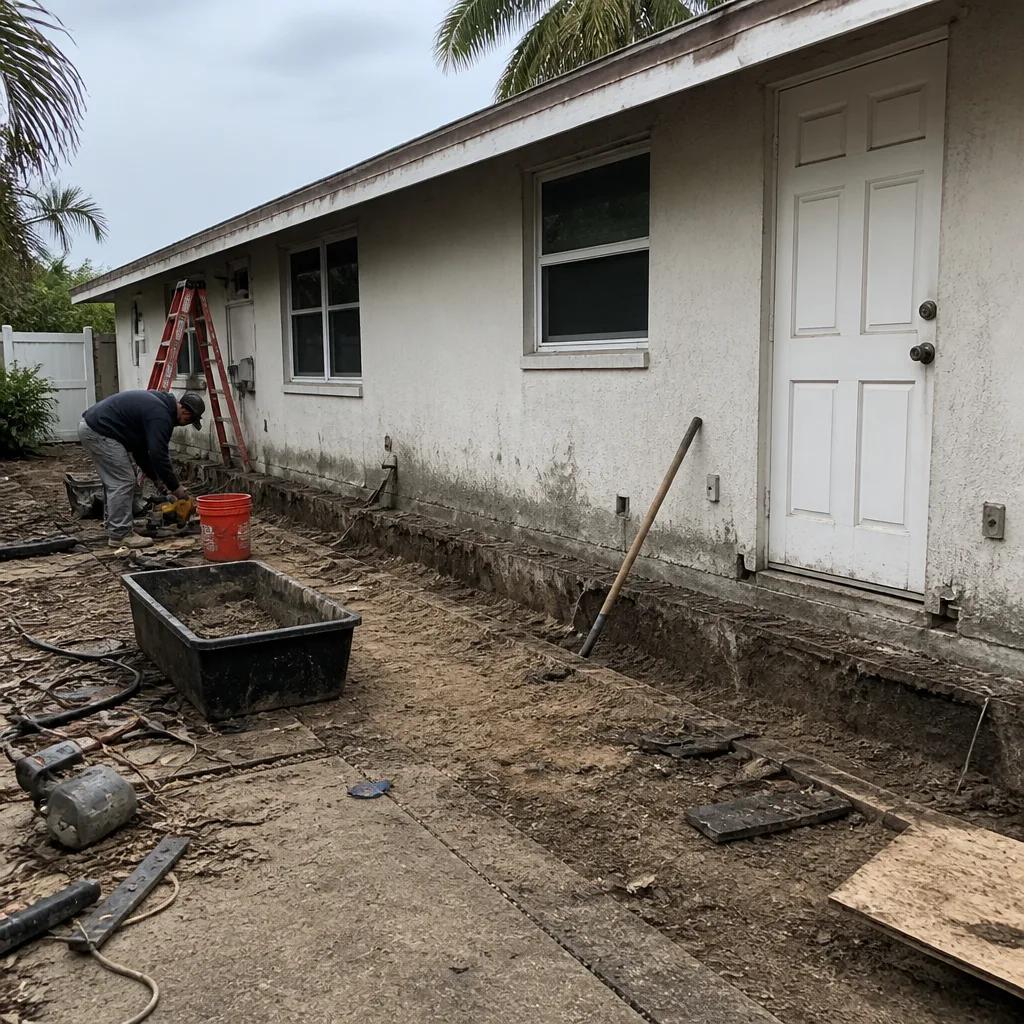 Before
 After
After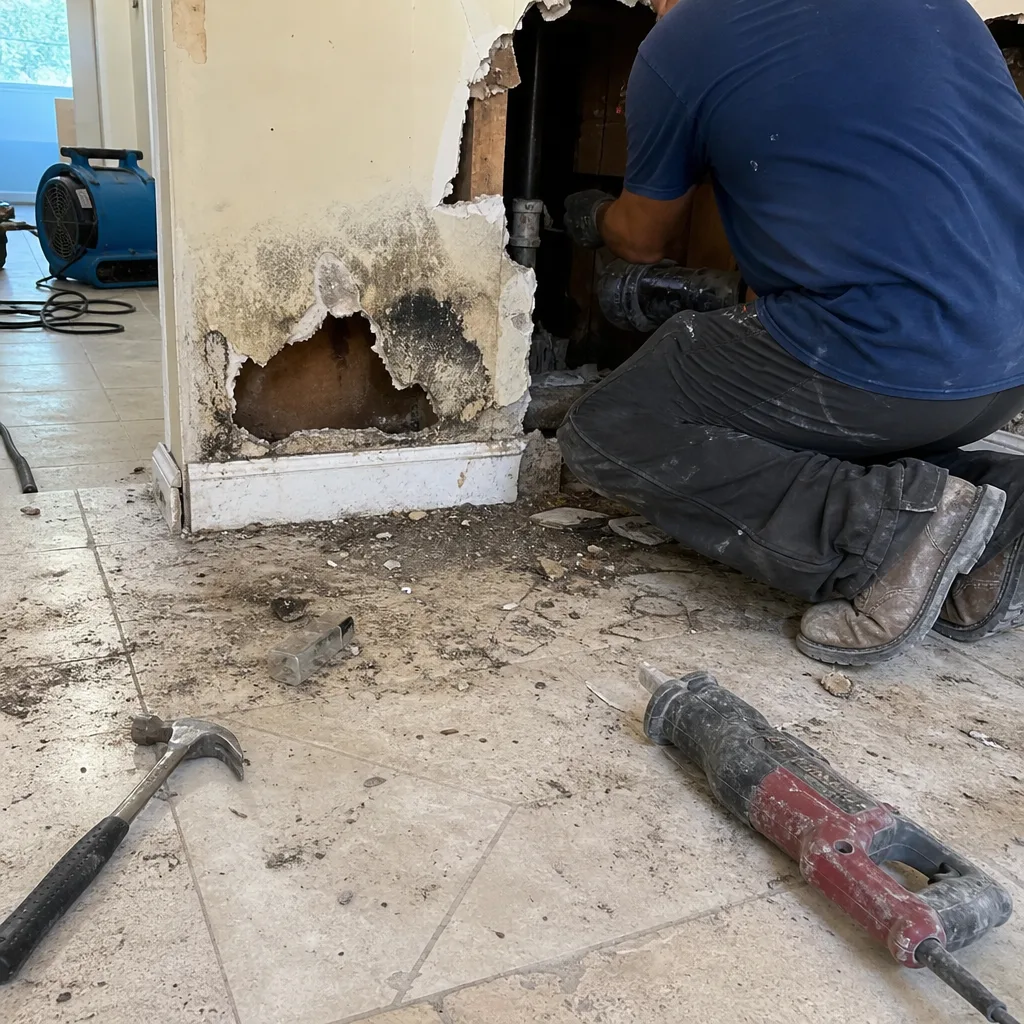 Before
 After
After