Last updated October 15, 2026





Free written scope consultation - allowances, timeline, and change-order rules on paper before a single trade is scheduled
Construction Cost Breakdown: The Fort Lauderdale Homeowner’s Reference for 2026
A kitchen remodel quoted at $45,000 in Orlando can cost $62,000 for the same scope in Fort Lauderdale, and the difference isn’t contractor markup. It’s code-mandated material specifications, coastal environmental requirements, and labor market conditions that no reputable builder can negotiate away. This guide explains exactly where your money goes on a Fort Lauderdale construction project in 2026, what those three cost drivers actually are, and how to read a bid so you know what you’re paying for before you sign anything.
Styles & brands we work with
Quick Answer
Construction costs in Fort Lauderdale in 2026 run 18-30% above Florida state averages due to three structural factors: impact-rated materials required by Miami-Dade and Broward County building codes, coastal corrosion and moisture premiums on materials that survive salt air, and a licensed subcontractor shortage that has pushed skilled labor rates higher across Broward County. A mid-range kitchen remodel currently runs $55,000-$75,000, a bathroom remodel $22,000-$38,000, and a whole-home renovation $150,000-$300,000 depending on square footage and scope. The best protection against overpaying is a written price from a contractor who verifies who’s coming, what it costs, and what’s guaranteed before work begins.
Table of Contents
- Line-Item Cost Breakdowns for Fort Lauderdale’s Three Most Common Projects
- The Coastal Premium: Materials That Cost More Here and Why
- Permits, Inspections, and Impact Fees: The Costs Not on the Initial Bid
- Written Price vs. Estimate: How to Read Change-Order Terms
- Licensed vs. Unlicensed Labor: What the Cost Differential Actually Means
- How to Evaluate a Fort Lauderdale Construction Bid in 7 Steps
- What a 365-Day Done Right Promise Means in Practice
- Common Mistakes to Avoid
- When to Call a Professional
- Frequently Asked Questions
- The Bottom Line
Line-Item Cost Breakdowns for Fort Lauderdale’s Three Most Common Projects
National averages don’t help a Fort Lauderdale homeowner. You need numbers that reflect Broward County material prices, local permit fees, and what licensed crews in this market actually charge in 2026. We’ve broken down the three projects homeowners ask about most, with real ranges we see on jobs across Fort Lauderdale neighborhoods from Victoria Park to Coral Ridge to Rio Vista.
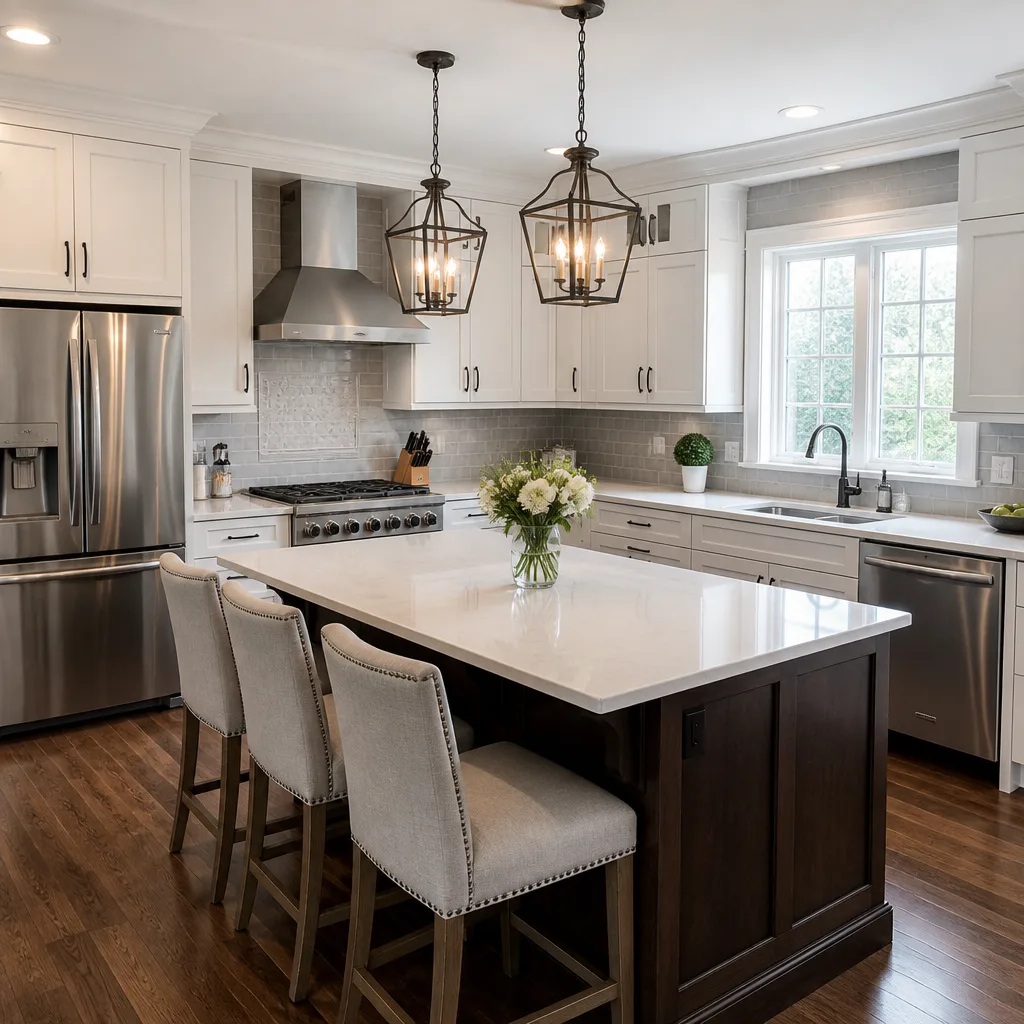
Kitchen Remodel: $55,000 – $75,000 (Mid-Range, 200-250 sq ft)
- Cabinetry (semi-custom, plywood construction): $18,000 – $28,000. Brands like KraftMaid and Wellborn hold up better in Florida’s humidity than imported particleboard boxes that swell and delaminate within five years of a coastal kitchen’s moisture cycles.
- Countertops (quartz, 40-60 sq ft): $5,000 – $8,000. Cambria, Silestone, and Caesarstone quartz run $85-$125 per square foot installed in Fort Lauderdale, including fabrication and templating.
- Plumbing rough-in and fixture installation: $3,500 – $7,000. Moving a sink or adding a pot filler requires re-routing supply lines, which in older Fort Lauderdale homes built before 1990 often means replacing corroded galvanized pipe sections.
- Electrical (new circuits, under-cabinet lighting, outlet relocations): $2,500 – $5,500. Older homes in areas like Sailboat Bend frequently need panel upgrades to meet current code, which adds $3,000-$5,000 if your service is under 150 amps.
- Flooring (porcelain tile or luxury vinyl, 200-250 sq ft): $4,000 – $7,000. Porcelain tile is the better choice in Fort Lauderdale because it doesn’t absorb the humidity that warps laminate and engineered wood in non-air-conditioned periods.
- Demolition and disposal: $2,000 – $3,500. Dump fees in Broward County run higher than inland Florida counties due to transfer station costs.
- Drywall, painting, trim: $3,000 – $5,000.
- Project management, design, permits: $7,000 – $12,000.
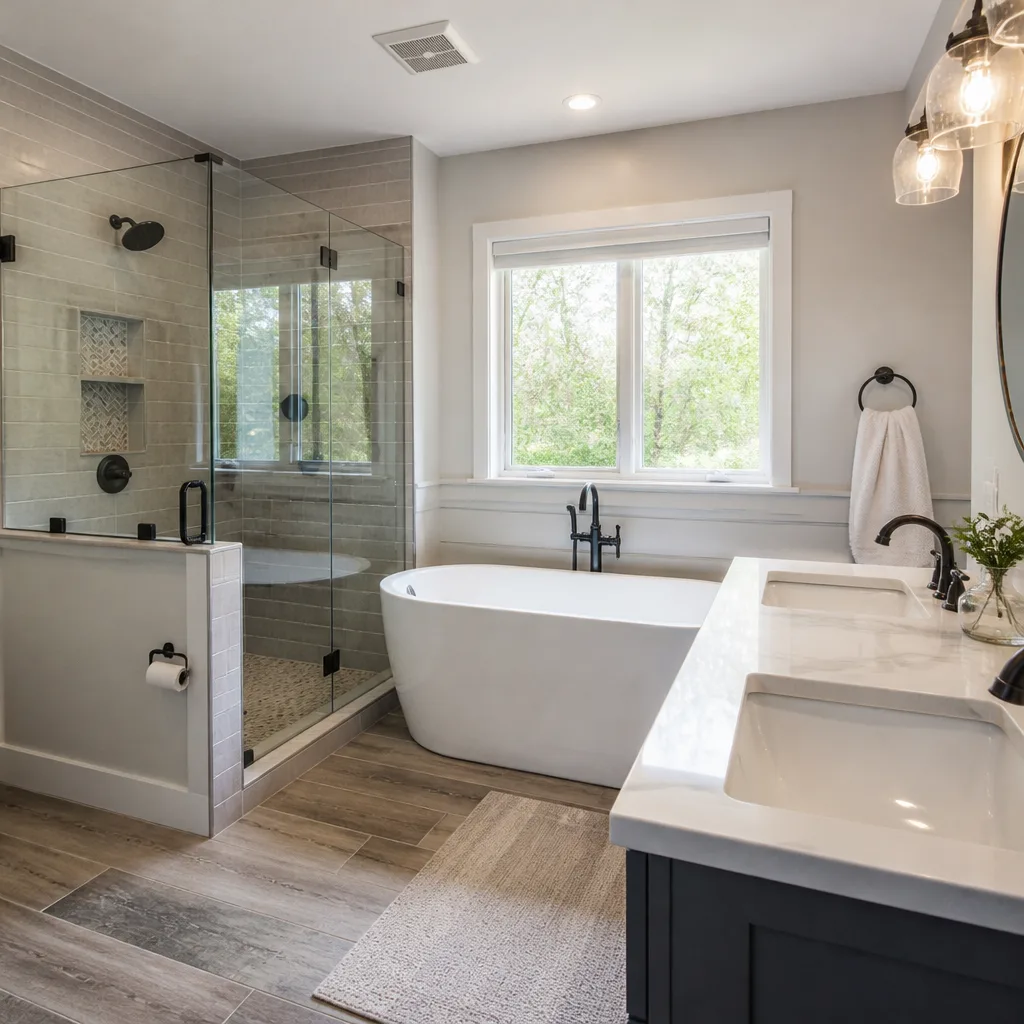
Bathroom Remodel: $22,000 – $38,000 (Mid-Range, 50-80 sq ft)
- Demolition and waterproofing prep: $2,500 – $4,500. Proper waterproofing in a Fort Lauderdale bathroom is non-negotiable. We use Schluter systems – the orange membrane and metal trim strips that seal the edge where tile meets flooring – because South Florida humidity gets behind improperly sealed tile and feeds mold inside walls.
- Plumbing (shower valve replacement, drain relocation, supply line updates): $3,000 – $6,500. Homes in neighborhoods like Poinsettia Heights with original 1950s-1960s cast iron drains often need partial drain replacement due to internal corrosion from decades of mineral-heavy municipal water.
- Tile work (shower walls, floor, 100-150 sq ft): $5,000 – $9,000. Licensed tile setters in Broward County charge $35-$60 per square foot for shower work in 2026, and that price includes the waterproofing substrate that code requires.
- Vanity and countertop: $2,500 – $5,500.
- Glass shower enclosure (frameless, custom): $2,500 – $4,000. Impact-rated glass isn’t required for interior enclosures, but hardware must be corrosion-resistant stainless steel or brass because chrome fixtures pit within three years in salt-adjacent air.
- Electrical (exhaust fan, lighting, GFCI protection): $1,200 – $2,500. Florida building code requires a properly vented exhaust fan in any bathroom with a shower, and the fan must terminate outside the building envelope, not into the attic.
- Permits and inspections: $800 – $1,500.
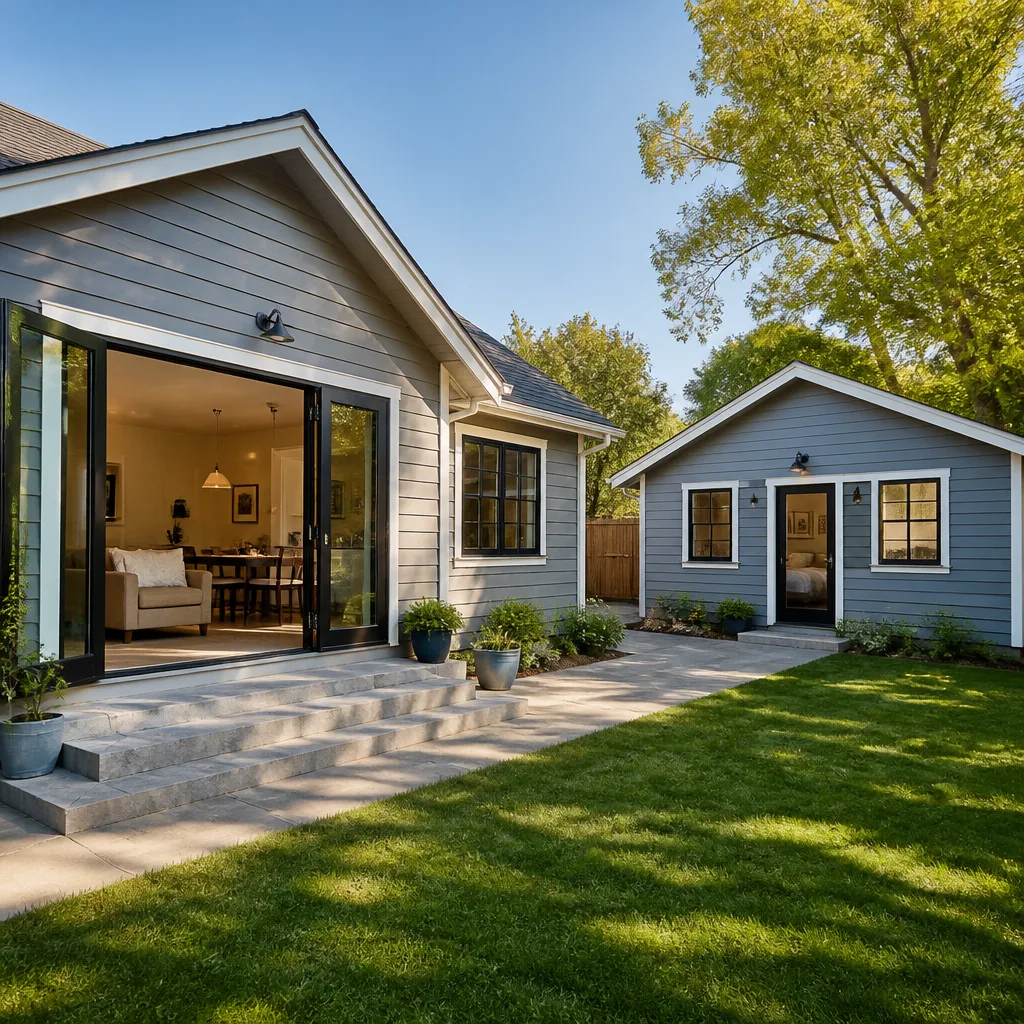
Whole-Home Renovation: $150,000 – $300,000 (1,800-2,500 sq ft)
- Structural work (beam replacements, wall relocations, foundation repair): $15,000 – $40,000. Fort Lauderdale homes built before Hurricane Andrew in 1992 often lack the strapping and tie-down requirements in current code, so any structural touch triggers mandatory upgrades you can’t skip.
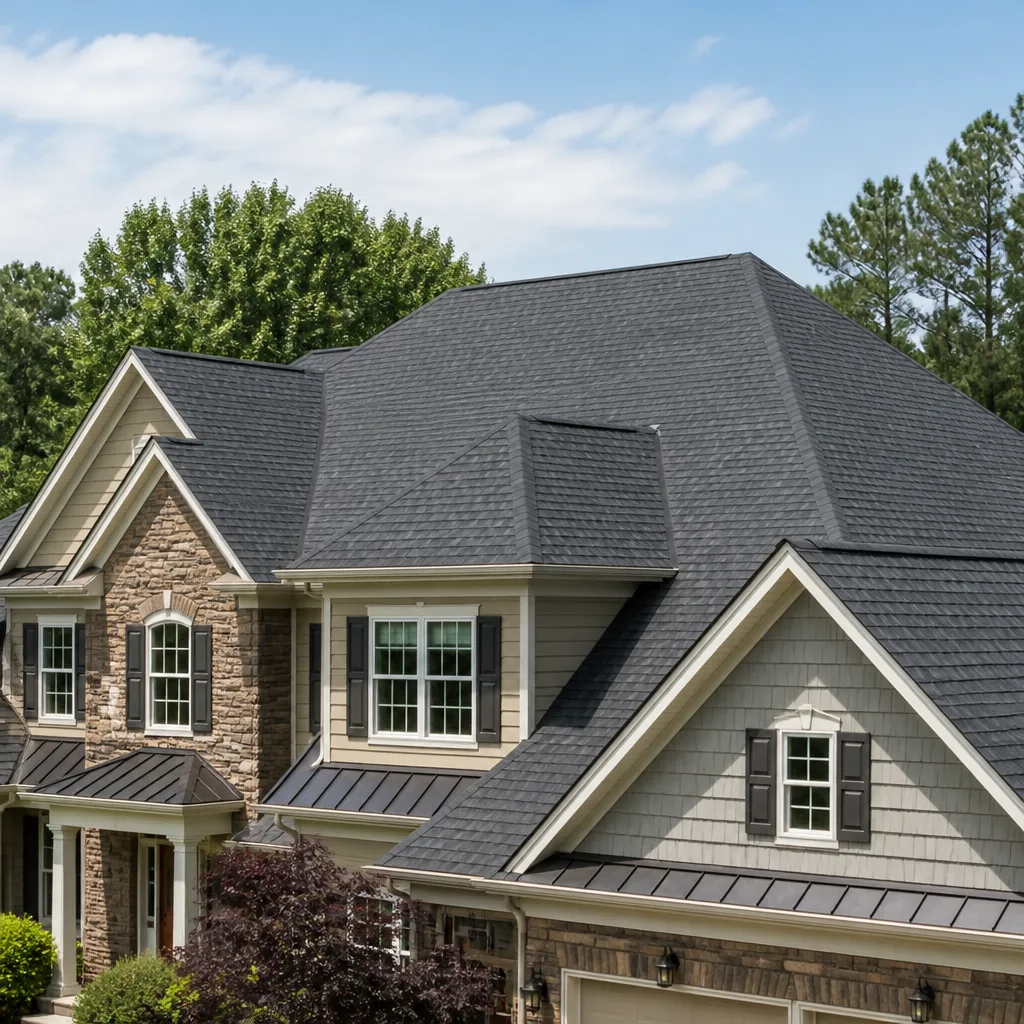
- Roof replacement (if included, architectural shingle or standing seam metal): $18,000 – $45,000. Broward County’s High Velocity Hurricane Zone requirements add roughly 30% to roofing costs compared to inland Florida because of fastener patterns, enhanced underlayment, and peel-and-stick membrane requirements that extend further up the roof deck.
- Impact windows and doors (if included, 15-25 openings): $20,000 – $55,000. This is the single largest line item on most whole-home renovations in Fort Lauderdale, and it’s mandatory on any opening you touch during a permitted renovation.
- Electrical rewire (if original wiring): $12,000 – $25,000. Homes built before 1975 in Fort Lauderdale frequently have aluminum branch circuits that insurers now flag, and many homeowners choose full replacement during a whole-home renovation to keep their policy in force.
- Plumbing repipe (if original galvanized or cast iron): $10,000 – $20,000.
- Kitchen and bathrooms (2-3 baths): $70,000 – $120,000 combined, using the ranges above.
- Flooring throughout: $15,000 – $30,000.
- Painting, drywall, trim, doors: $15,000 – $30,000.
- General contractor overhead, project management, design, permits: $25,000 – $50,000.
These are 2026 Fort Lauderdale numbers, not national averages. If a bid comes in dramatically below these ranges, the question isn’t “which contractor is more efficient?” It’s “which materials and which labor are being swapped out, and will the inspector catch it?”
For a more detailed look at how one of these projects comes together from start to finish, our Home Remodeling in Fort Lauderdale guide walks through the full process.
The Coastal Premium: Materials That Cost More Here and Why
The phrase “coastal premium” gets thrown around loosely, but in Fort Lauderdale it means something specific: the city sits inside the High Velocity Hurricane Zone, a designation that covers all of Broward and Miami-Dade counties and mandates impact-rated or impact-protected materials on every exterior opening and every structural connection. See our Construction Warning Signs: A Fort Lauderdale Homeowner’s Reference Guide for how to spot when a contractor is cutting corners on these requirements. This isn’t a contractor convenience. It’s Chapter 16 of the Florida Building Code, and it applies to any permitted renovation, not just new construction.
Here are the specific materials carrying a price surcharge in South Florida, and what drives each one:
- Impact windows and doors: Expect $1,000-$2,800 per opening installed, versus $400-$900 for standard insulated units you’d install in Orlando or Tampa. Impact-rated laminated glass must survive a 9-pound 2×4 fired at 34 miles per hour without penetration. The glass, frame, and installation method all have to meet Miami-Dade NOA (Notice of Acceptance) standards, and that testing cost is baked into the product price.
- Roofing fasteners and underlayment: GAF, CertainTeed, and Owens Corning all manufacture HVHZ-compliant roofing systems, but the installed cost differs from inland Florida by $300-$500 per square. The fastening pattern is tighter, the nails are longer and larger-diameter, and the underlayment requirements include self-adhering membrane at the eaves, valleys, and penetrations. In neighborhoods like Shady Banks where mature tree canopy increases debris risk during storms, that membrane coverage becomes even more important.
- Exterior cladding: James Hardie fiber cement siding carries a meaningful installed premium in Fort Lauderdale because of the battens, flashing, and corrosion-resistant fasteners required for installation within a mile of salt water. If you’re in an area like Las Olas Isles or Harbor Beach where salt spray reaches the structure, standard galvanized fasteners will rust through within a decade, so stainless steel fasteners are specified instead.
- Interior moisture control: Sheetrock in Fort Lauderdale renovation jobs should be mold-resistant (often called green board or purple board) in kitchens, bathrooms, and laundry rooms, and in many whole-home renovations, on all exterior walls. That material runs about 30% more than standard drywall, and the premium is directly tied to South Florida’s humidity, which sits above 70% for most of the year.
The point homeowners need to understand: when a material line item looks 25-40% higher than what a cousin in Jacksonville paid, that’s not contractor markup. That’s the cost of building to a code written after a catastrophic hurricane season, in a climate that eats standard building materials.
Permits, Inspections, and Impact Fees: The Costs Not on the Initial Bid
Every licensed contractor in Fort Lauderdale pulls permits through the City of Fort Lauderdale Building Services Division, and those permits carry fees that don’t always show up on the first number a contractor quotes verbally. For a deeper look at the process, read our Construction Permits, Codes & Inspections in FL: What You Need to Know. Here’s what actually gets added, and why it surprises homeowners:
- Building permit fees: Fort Lauderdale uses a valuation-based fee schedule. A $60,000 kitchen remodel typically carries $1,200-$2,200 in building permit fees. A $200,000 whole-home renovation runs $3,500-$6,000. These fees are set by city ordinance and are identical regardless of which contractor pulls the permit.
- Plan review fees: If your project requires drawings reviewed by the city (structural changes, additions, anything touching the building envelope), expect a plan review fee of 65-70% of the permit fee. This can add $800-$4,000 depending on scope.
- Inspection fees: Most Fort Lauderdale renovation permits include a re-inspection fee if the inspector fails a visit, and each subsequent inspection carries an additional charge. A contractor who sequences work correctly avoids these entirely. A contractor who rushes rough-in and fails framing or electrical inspection twice adds $300-$800 to your final cost in re-inspection fees alone.
- Impact fees: These apply to new construction and significant additions, not interior remodels. But if your whole-home renovation adds square footage, Fort Lauderdale assesses impact fees for water, sewer, and transportation infrastructure. Current 2026 rates run $8,000-$15,000 for a typical 400-600 square foot addition, paid at permit issuance.
- Deputy surcharges and state fees: Florida adds a 1% surcharge on permit fees that funds the Florida Building Code administrators’ training program, plus a $4 surcharge per permit. These are trivial individually but show up as line items on the permit invoice homeowners rarely see.
Here’s the practical takeaway: a written price from a contractor should itemize permit costs separately and note whether the contractor pays them upfront and includes them in the contract, or bills them as they’re incurred. We put written prices in front of homeowners on every project, every time, before any work starts, and permit fees are listed plainly rather than absorbed into a vague “overhead” category.
For a more complete picture of how this works in practice, see our General Contractor in Fort Lauderdale page, which explains the permit process from application to final inspection.
Written Price vs. Estimate: How to Read Change-Order Terms
In Florida construction contracting, “estimate” and “quote” are not the same thing. An estimate is a professional opinion of what a project might cost and can legally change as work progresses. A written price, sometimes called a fixed-price contract, binds the contractor to the stated amount unless the scope of work changes in writing.
Here’s what to look for in the change-order section of any Fort Lauderdale construction contract:
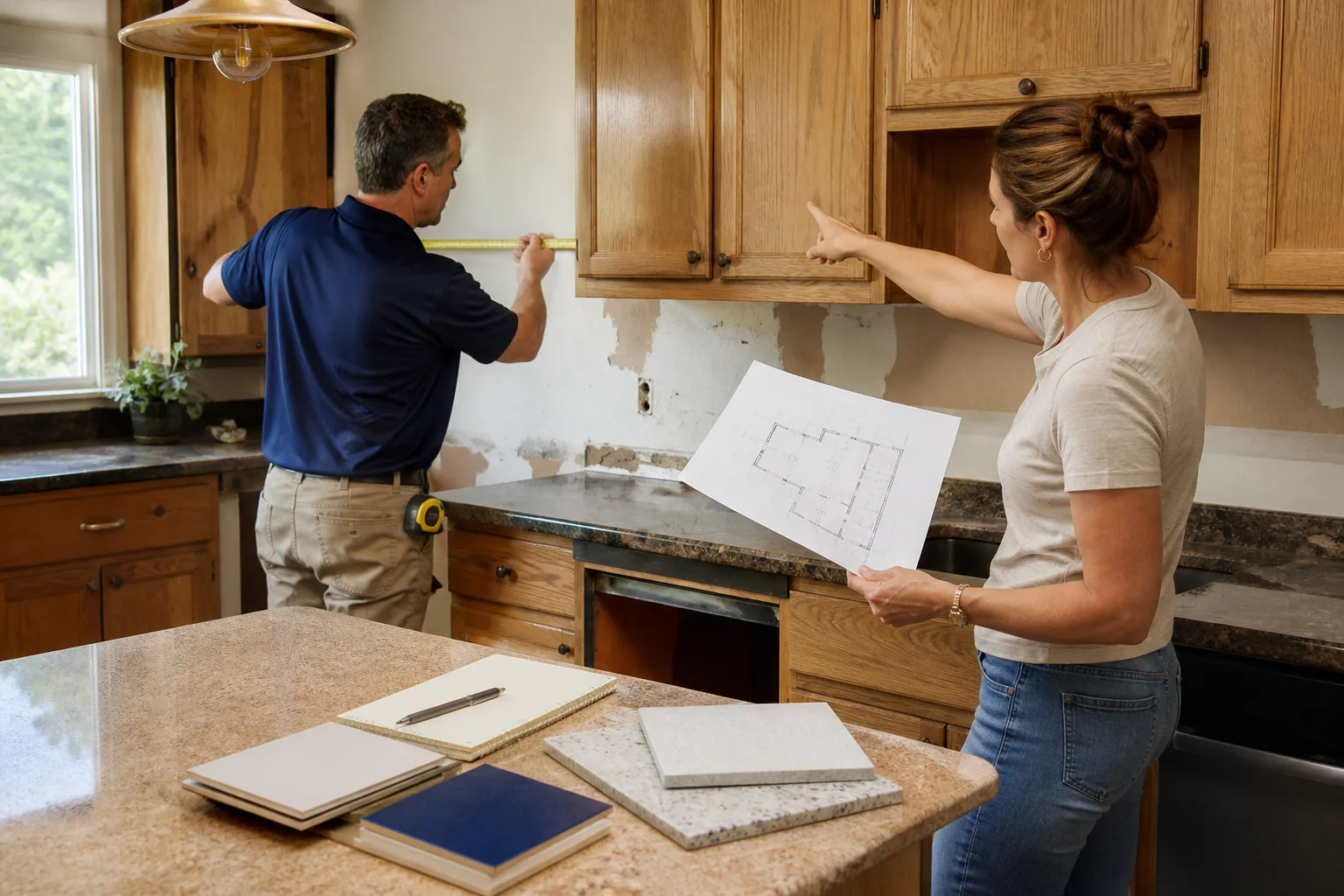
- The scope of work description: It must list specific materials, quantities, and finishes. “Install kitchen cabinets” is an estimate. “Install 18 linear feet of KraftMaid maple shaker cabinets in Slate finish, including crown molding, soft-close hinges, and hardware” is a written price scope.
- Allowance amounts: Contractors use allowances for items the homeowner selects later (fixtures, tile, lighting). The written price should state each allowance amount clearly, and the change-order terms should explain that if you select a $3,000 Kohler tub against a $1,500 allowance, the difference becomes a change order for $1,500, not an open-ended cost.
- Unforeseen conditions language: Every honest contract includes a clause for hidden conditions like rotted framing behind drywall or corroded drain lines under the slab. The clause should say that any additional work requires a written change order signed by the homeowner before the work proceeds. A contract that says “contractor may proceed with necessary repairs and bill at cost-plus” is a blank check.
- Change order process: It should require a written document describing the change, the price, and any impact on the schedule, signed by both parties. Verbal change orders don’t hold up in Florida disputes, and honest contractors write everything down anyway.
- No permit means no inspection: Unlicensed workers can’t pull permits in Broward County. Work proceeds without a single independent code review, meaning wiring, plumbing, and structural connections go unverified.
- Your homeowner’s insurance is at risk: If unpermitted work causes a fire or a leak that damages the home, most Fort Lauderdale homeowners’ policies deny the claim based on the unpermitted modification. This is a documented exclusion in standard Florida HO-3 policies.
- Sale complications: Fort Lauderdale real estate contracts require sellers to disclose unpermitted work. When a buyer discovers a renovated bathroom with no permit history, the deal often collapses or the seller pays to legalize the work retroactively, which costs 2-3 times the original permit fee.
- No warranty recourse: Unlicensed workers operate outside Florida’s construction lien and warranty laws. If the work fails, there’s no licensing board to complain to, no bond to claim against, and no legal path that makes you whole.
- Confirm the license. Look up the contractor’s Florida state license on the Department of Business and Professional Regulation website. The license must be active, and the name on the license must match the name on the contract. If a different company name appears, that’s a red flag.
- Compare scope descriptions line by line. Two bids at different prices almost always describe different scopes. Put them side by side and identify which materials, allowances, and exclusions differ. The lower bid is lower for a reason, and the comparison tells you what that reason is.
- Check the permit line item. Every legitimate Fort Lauderdale renovation bid includes a permit fee line. If it’s missing, ask where the permit cost appears. If the contractor says “we handle permits internally,” that’s not an answer. The cost exists, and it’s being hidden or absorbed somewhere.
- Review the payment schedule. Florida law caps deposits at 10% for residential work over $1,000 unless the contractor posts a performance bond. A bid demanding 50% upfront is either bonded or violating Florida Statute 489.126. Neither is a good sign.
- Ask for the written price guarantee. A bid that arrives verbally or in an email that says “estimate” is not a fixed price. You want a contract that states a specific dollar amount and requires written change orders for any adjustment. This is what we deliver on every job, and it’s part of the Mason Remodeling Co Fort Lauderdale home standard.
- Verify the warranty terms. The bid should state what’s covered, what’s excluded, and for how long. “Backed by our guarantee” means nothing. “Covered for 365 days from the completion date, including labor and materials for installation defects, with exclusions listed in section 8” means something.
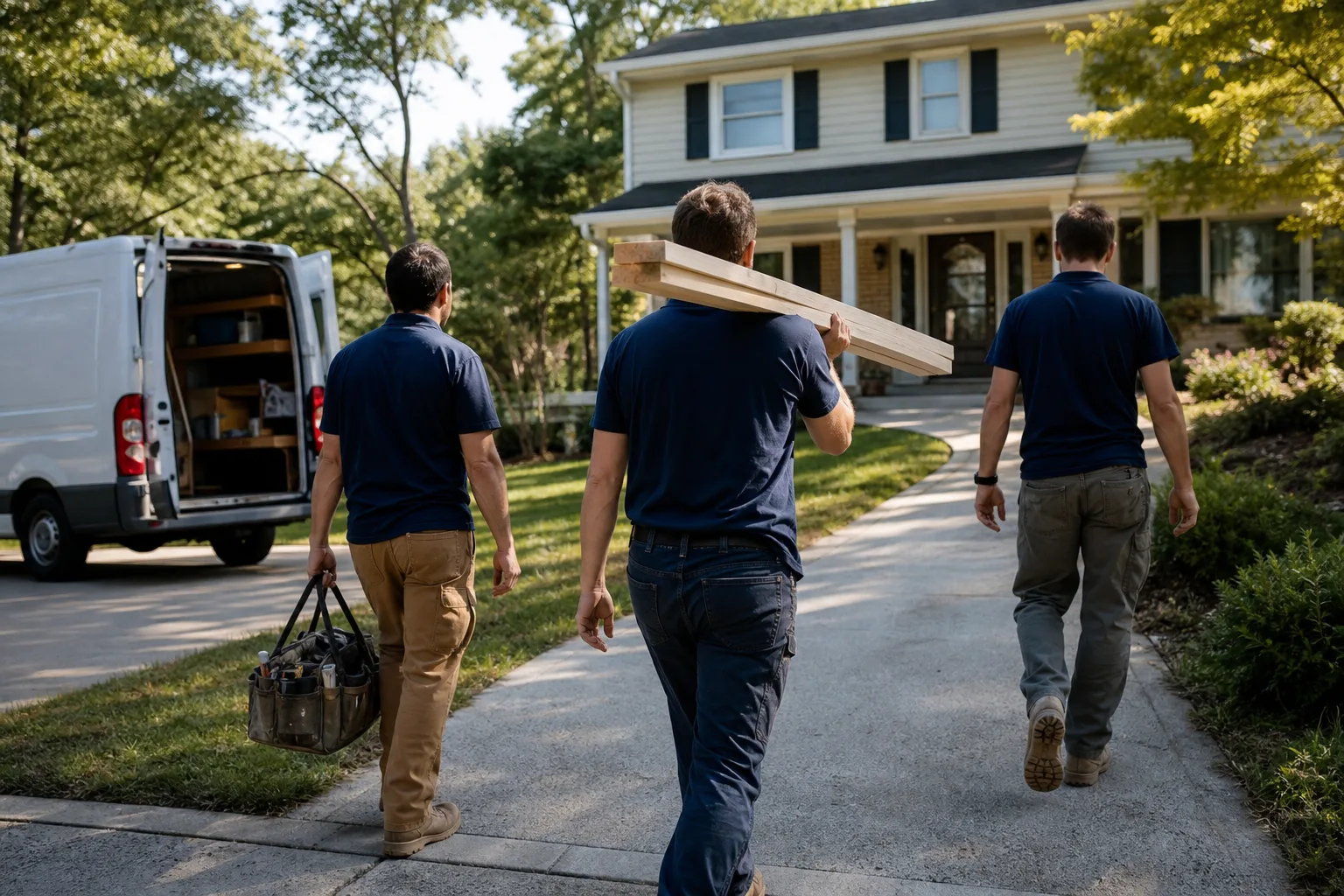
- Ask who specifically will be in your home. Fort Lauderdale homeowners, especially those home alone or with young children, need to know who’s coming. Mason Remodeling provides the name and photo of every technician before the visit. If a contractor can’t tell you who will be working in your kitchen, that’s a safety decision you’re being asked to make blind.
- Comparing bids without comparing scopes. A $48,000 kitchen bid and a $62,000 kitchen bid are almost never describing the same kitchen. The lower bid typically swaps plywood cabinet boxes for particleboard, omits permits, uses unlicensed labor for mechanical work, or excludes something that the other bid includes. Line up the scope descriptions before you look at the bottom line.
- Accepting a verbal estimate as a fixed price. In Florida, if it’s not in writing, it didn’t happen. A contractor who won’t commit to a written price before work starts is preserving the right to bill more at the end. No reputable Fort Lauderdale remodeler operates this way.
- Skipping permits to save money. The $1,200-$2,500 permit fee on a kitchen remodel feels like an annoyance until the work fails and your insurer denies the claim, or you try to sell the house and the unpermitted work surfaces on the disclosure form. The cost of legalizing unpermitted work after the fact is three to five times what the original permit would have cost.
- Choosing the lowest licensed bid without checking the warranty. Licensed contractors in Fort Lauderdale all pulled permits and passed inspections. That’s the floor, not the ceiling. The differentiator is what happens when a problem shows up at month 9. Ask for the warranty in writing and read the exclusions page before you choose.
- Ignoring material specifications in coastal zones. A bid that specifies standard galvanized fasteners on a roof deck within two miles of the Fort Lauderdale shoreline is a bid for premature rust failure. Impact-rated and corrosion-resistant materials aren’t optional upgrades. They’re code minimums in the High Velocity Hurricane Zone.
- Not asking who will be inside the home. Fort Lauderdale homeowners often open the door to a crew they’ve never met, with no name, no photo, and no verification. Mason Remodeling gives every homeowner the technician’s name and photo before the visit, and that person arrives in a marked uniform with a photo ID badge. If another contractor won’t do that, the homeowner is bearing a safety risk that doesn’t belong to them.
- Assuming the amount of time a contractor has been in business equals quality. Longevity matters, but what matters more is how the business operates today. We were founded in 2004 and every project still starts with a written price, a named and verified crew, and warranty terms in plain language. Ask any contractor you’re considering to match those three things.
The written price guarantee is the single most important piece of paper in a Fort Lauderdale renovation. We deliver a written price before any work begins on every project, and it’s never an upgrade or a favor. It’s the standard.
For specifics on how this applies to bathroom projects specifically, our Bathroom Remodeling in Fort Lauderdale guide includes example allowance structures.
Licensed vs. Unlicensed Labor: What the Cost Differential Actually Means
Broward County has a licensed subcontractor shortage in 2026, and it shows up in the numbers. Licensed plumbing contractors charge $110-$180 per hour in Fort Lauderdale. Unlicensed workers doing plumbing rough-in charge $45-$70 per hour. Licensed electricians run $100-$160 per hour. Unlicensed helpers run $40-$60. That differential isn’t because licensed contractors are overpriced. It’s because the license itself requires four years of documented experience, passage of a Florida state examination, continuing education credits, and liability insurance that costs $8,000-$15,000 annually for a one-person shop in South Florida.
Here’s what the cheaper bid actually means when you see unlicensed labor on a Fort Lauderdale project:
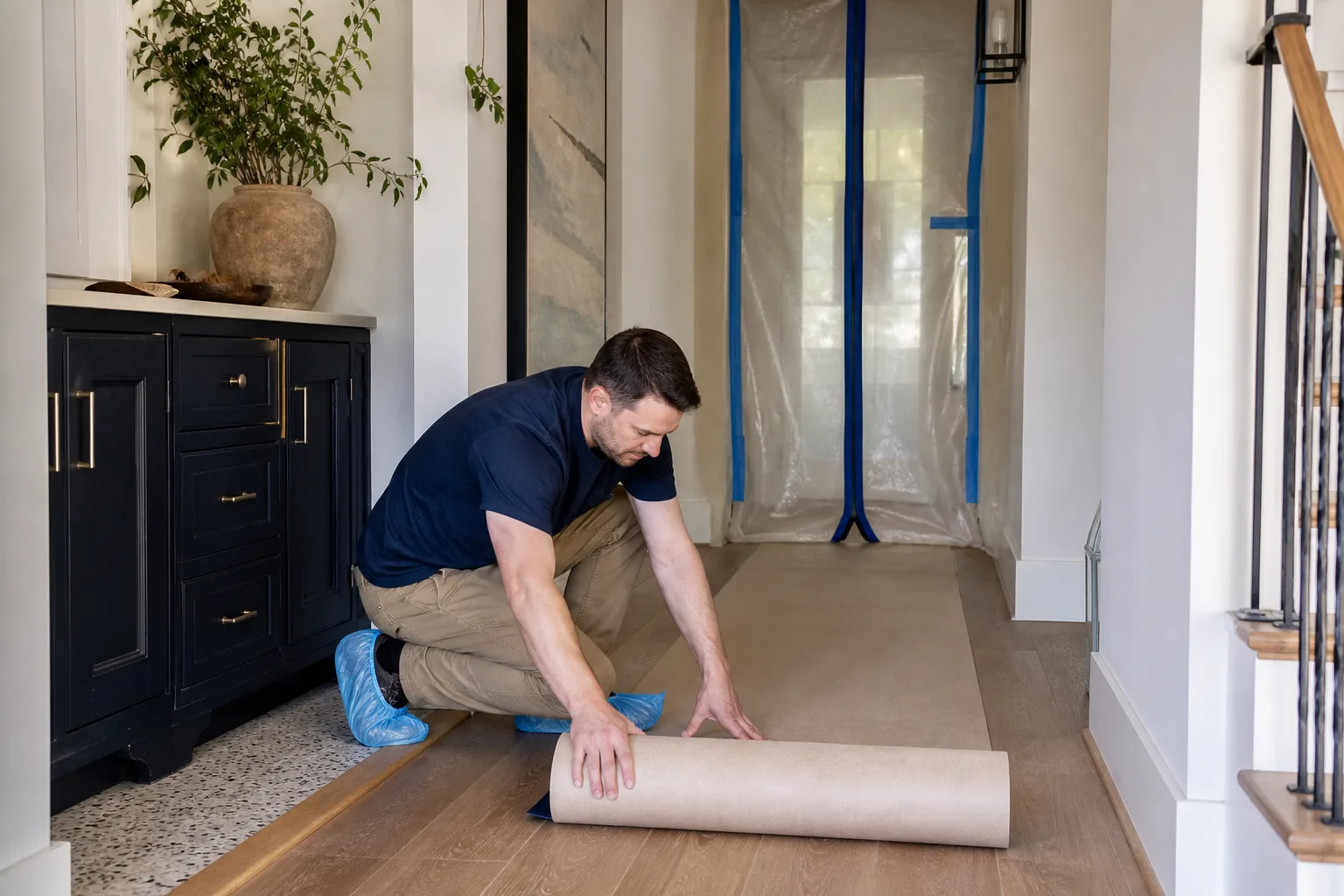
Mason Remodeling operates as part of the Threshold Group family of home-service companies, and every technician on a Fort Lauderdale job is background-checked, identity-verified, and arrives in a clean marked uniform with a photo ID badge. We introduce every crew member by name and photo before the visit. That’s the Threshold Standard, and it protects homeowners who are often home alone or opening the door to people they’ve never met. Isaac Pruett has built this company since 2004 on the principle that homeowners deserve to know exactly who is coming before the door opens.
If you’re comparing bids and one is 30% lower than the others, ask one question: “Will you show me your Florida state contractor license number, and will the permit be pulled in your company’s name?” If the answer is anything other than an immediate yes, you’re looking at unlicensed labor risk, not contractor efficiency.
How to Evaluate a Fort Lauderdale Construction Bid in 7 Steps
Here’s a practical, step-by-step method for comparing bids on any Fort Lauderdale renovation in 2026. This works whether you’re renovating a mid-century ranch in Coral Ridge or updating a condo kitchen on Galt Ocean Drive.
What a 365-Day Done Right Promise Means in Practice
A workmanship warranty is only as good as the terms written into it. In Fort Lauderdale, where humidity and salt air expose installation defects faster than inland climates, that warranty matters more than homeowners realize. A shower pan installed slightly off-level will fail within six months here because the water sits instead of draining. A cabinet door misaligned by 1/8 inch will swell and bind by August because the moisture content in the wood shifts with the seasons.
Our 365-Day Done Right Promise works like this: if any work we performed is not right within 365 days from the completion date, we make it right at no cost to the homeowner. No charge, no dispute process, no conditions beyond reporting the issue and allowing access to the affected area.
This promise applies across general contracting, bathroom remodeling, and whole-home remodels. It’s written into the contract, not mentioned casually in conversation. And it’s structural to how we operate in Fort Lauderdale: because we verify who’s coming before they arrive and put the price in writing before work starts, the warranty is the third leg of the same stool. We can stand behind the work because we know who did it and what it cost.
Many contractors in South Florida offer a 1-year “workmanship warranty” that excludes specific items buried in fine print: caulking, grout, door adjustments, paint touch-ups. Ours lists exclusions explicitly and keeps them short, because the goal is to fix the problem, not to argue about whether it’s covered. Call (754) 354-3720 and ask for a copy of the guarantee language before you sign anything with any contractor. You’ll see the difference between a promise and a paragraph.
Common Mistakes to Avoid
When to Call a Professional
Some Fort Lauderdale homeowners attempt cosmetic work themselves (painting, trim, hardware swaps) and that’s reasonable. But any project that touches plumbing, electrical, structural framing, the building envelope, or waterproofing in a kitchen or bathroom should be handled by a licensed contractor with a permit. Our DIY vs Professional Construction: The Fort Lauderdale Homeowner’s Decision Guide breaks down exactly where the line falls. The High Velocity Hurricane Zone code requirements in Broward County are too specific and too consequential to navigate without professional knowledge, and the insurance and resale implications of unpermitted work are too severe. We’ve also seen several situations where load-bearing walls were partially removed in older Fort Lauderdale homes without permits, leaving the roof structure compromised and requiring emergency shoring before the renovation could even begin.
Mason Remodeling Co Fort Lauderdale offers free estimates in Fort Lauderdale. Call (754) 354-3720 to schedule a walkthrough, ask about our written price guarantee, and get specific numbers for your project. A live person answers every call, 24 hours a day, 7 days a week. No call trees, no voicemail loops.
Frequently Asked Questions
A mid-range kitchen remodel in Fort Lauderdale runs $55,000 to $75,000 in 2026, including cabinetry, quartz countertops, plumbing and electrical updates, flooring, and permits. The same scope in inland Florida might cost $40,000 to $50,000 because impact-rated materials, coastal moisture requirements, and Broward County labor rates all add to the total. Call (754) 354-3720 for a written price on your specific kitchen.
Fort Lauderdale sits inside the High Velocity Hurricane Zone, which mandates impact-rated windows, doors, and roofing systems that cost 25-40% more than standard materials used elsewhere in the state. The coastal environment also requires corrosion-resistant fasteners and moisture-resistant drywall, and Broward County’s licensed subcontractor shortage has pushed skilled labor rates higher than inland markets. These are code and market conditions, not contractor choices.
Building permit fees in Fort Lauderdale are valuation-based: a $60,000 kitchen remodel typically carries $1,200-$2,200 in permit fees, while a $200,000 whole-home renovation runs $3,500-$6,000. Add plan review fees of 65-70% of the permit fee, inspection fees, and any impact fees for additions, and the total permit cost on a major renovation can reach $10,000-$20,000. These fees are set by the city and do not vary by contractor.
Lower bids in Fort Lauderdale almost always reflect one or more of these factors: unlicensed labor that can’t pull permits, particleboard cabinetry that fails in humidity, standard fasteners that corrode in salt air, exclusions for waterproofing or mold-resistant materials, or the absence of a written price that allows the final invoice to exceed the quote. If a bid is 25% below comparable bids, ask to see the license, the scope line items, and the permit plan before you choose.
No. An estimate is a professional opinion that can legally change as work progresses. A written price is a contractual commitment to a specific dollar amount unless the scope changes in writing. Before signing any Fort Lauderdale renovation contract, ask whether the price is fixed and require written change-order terms for any adjustment. We deliver a written price before any work begins, every time.
A mid-range kitchen remodel in Fort Lauderdale typically takes 6-10 weeks from demolition to final inspection. Bathroom remodels run 3-6 weeks. Whole-home renovations take 4-8 months. The schedule in Fort Lauderdale is influenced by permit processing times, which run 2-6 weeks depending on scope, and by material lead times on impact-rated windows and doors, which are often ordered at project start and take 4-10 weeks to arrive. Call (754) 354-3720 for scheduling on your specific project.
The Bottom Line
Fort Lauderdale construction costs in 2026 are higher than the rest of Florida for reasons that are structural, not negotiable: hurricane code requirements, coastal material premiums, and a licensed labor market that charges what its time is worth. Your protection as a homeowner is not to chase the lowest bid. It’s to demand a written price, insist on licensed, verified crews with names and photos, and require warranty terms stated in plain language. Mason Remodeling has done exactly that since 2004, on every job, for every Fort Lauderdale homeowner who calls. Browse our more guides & resources to keep learning before you start your project. If you’re planning a project, call (754) 354-3720 and start with a free estimate and a written price.
Written by Isaac Pruett, Owner at Mason Remodeling Co Fort Lauderdale, serving Fort Lauderdale since 2004.
See the difference
 Before
 After
After Before
 After
After Before
 After
After