Last updated October 15, 2026








Free written scope consultation - allowances, timeline, and change-order rules on paper before a single trade is scheduled
Construction Warning Signs: A Fort Lauderdale Homeowner’s Reference Guide
Most Fort Lauderdale homeowners can spot the obvious contractor red flags: no license, a demand for full cash payment upfront, a bid scribbled on a napkin. But the warning signs that actually predict a project going sideways are quieter, and they tend to show up after the contract is signed and work is underway. The sign homeowners most often tell us they missed in hindsight is a contractor who went unreachable for 72 hours mid-project, not at the end, not before signing, but in the middle of a permitted job with inspections pending. This guide covers the warning signs that emerge during construction, how to read a job site in Fort Lauderdale, and how to document concerns in a way that protects you under Florida law without turning a fixable problem into a legal fight. For additional help, see our guide on How to Hire a Construction Contractor in Fort Lauderdale: A Step-by-Step Guide.
Styles & brands we work with







Quick Answer
The most serious construction contractor warning signs in Fort Lauderdale are mid-project silence, inspection delays on the Broward County permit portal, unannounced subcontractor swaps, and material downgrades after the contract is signed. Any one of these can indicate a contractor is cash-flowing your job against another project. Homeowners who catch these signs early and document them in writing protect their lien rights and their investment far better than those who only look for red flags before signing.
Table of Contents
- In-Project Warning Signs That Predict a Failed Job
- How to Read a Job Site: What a Well-Run Site Looks Like
- The Broward County Permit Status Check Every Homeowner Should Run Mid-Project
- Fort Lauderdale’s Post-Storm Contractor Surge: The Warning Signs That Follow a Hurricane
- How to Document Concerns in Writing Without Escalating to Conflict
- Material and Subcontractor Swaps: The Quiet Warning Signs
- Reading the Payment Schedule as a Warning System
- Common Mistakes to Avoid
- When to Call a Professional
- Frequently Asked Questions
- The Bottom Line
In-Project Warning Signs That Predict a Failed Job
Before any work begins, most Fort Lauderdale homeowners do their due diligence: they check the license, they ask for references, they compare bids. That diligence matters, but it only catches problems that exist on day one. The warning signs that predict a job spiraling out of control are the ones that emerge once work is already underway, and they follow a pattern that experienced contractors recognize immediately. A contractor who goes silent mid-project, misses scheduled inspections, or starts swapping materials and subcontractors without explanation is almost always dealing with a cash flow problem, not a scheduling conflict. In Fort Lauderdale’s remodeling market, where demand runs hot and crews are stretched thin, that cash flow problem usually means your deposit is funding someone else’s job.
Here are the in-project warning signs that matter most, in order of severity:
- Unresponsiveness exceeding 72 hours. A contractor who answered the phone in three rings before the contract was signed and now takes three days to return a text is telling you something. One missed day happens. Three missed days mid-project, especially when inspections are pending, is a structural problem.
- Inspection scheduling stalls. If the contractor claims inspections are “coming up” but the Broward County permit portal shows nothing scheduled, that is not a delay. That is avoidance.
- Subcontractor substitutions without notice. The electrician or plumber who showed up this week is not the one who was named in the contract, and nobody told you. This often means the original sub refused to return because they were not getting paid.
- Material downgrades explained as “just as good.” The contract said a specific cabinet line from Wellborn or KraftMaid, but boxes from a different, cheaper brand now sit in your garage. Sometimes this is a supply chain issue. Sometimes it is a margin grab. Either way, it requires an immediate conversation.
- Requests for draws ahead of schedule. The payment schedule says the next draw happens after rough-in inspection passes. The contractor asks for it before the inspection happens, “just to keep things moving.” That is a request to alter the contract mid-flight, and it shifts risk from the contractor to you.
What makes these signs dangerous is that each one, on its own, looks like a minor annoyance. A homeowner rationalizes: maybe the contractor is busy, maybe the supplier is late, maybe the inspection office is backed up. But when two or more of these signs appear together, the pattern is almost always the same: the contractor is overextended and using your job’s remaining funds to float another project. The fix is not to escalate to a fight. The fix is to document, ask direct questions, and hold the contractor to the written schedule and the written scope.
How to Read a Job Site: What a Well-Run Site Looks Like
A job site tells you more about a contractor in five minutes of observation than any marketing material or sales pitch. In our experience across hundreds of Fort Lauderdale remodeling and general contracting projects, the sites that finish on time and on budget share a set of visible characteristics that anyone can learn to read, no construction experience required. For a deeper look at keeping your project on track, check out our General Contractor Maintenance Checklist for Fort Lauderdale Homeowners. The site is a mirror of the contractor’s operating discipline. A contractor who cannot keep a work area clean and organized is not going to keep change orders under control or inspections passing smoothly.
Here is what a well-managed site looks like, and what the opposite looks like:
The Well-Run Site
- Designated material staging. Lumber, tile, drywall, and fixtures are stacked in one clear area, protected from water and weather. Materials are not scattered across the property or left where rain can reach them. Fort Lauderdale’s afternoon thunderstorms make this more than a neatness issue: a contractor who leaves drywall exposed to a summer downpour is going to install mold into your walls.
- Daily cleanup discipline. The site is swept at the end of each work day. Debris is in one place, not kicked into corners. Extension cords are coiled, not tangled and exposed to standing water.
- Posted permits. The building permit is posted on the front of the house or in a visible window, as Broward County requires. Not having the permit posted is a violation, and a contractor who skips a step this simple is skipping others you cannot see.
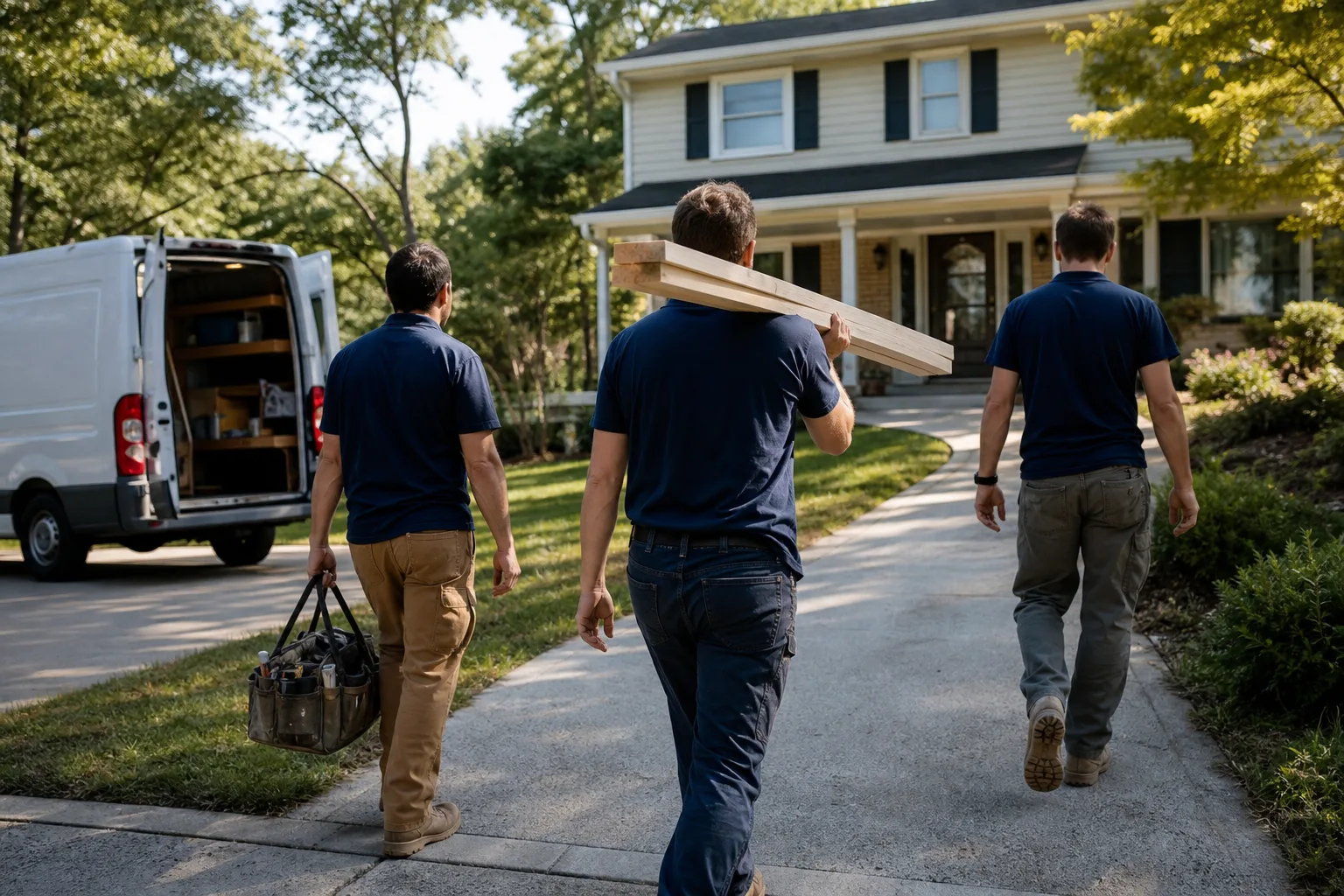
- Consistent, uniformed crew. You recognize the people showing up. They arrive in marked vehicles or clean work clothes, and you know their names. This matters for safety, but it also signals that the contractor has a stable, employed workforce rather than a rolling cast of day laborers.
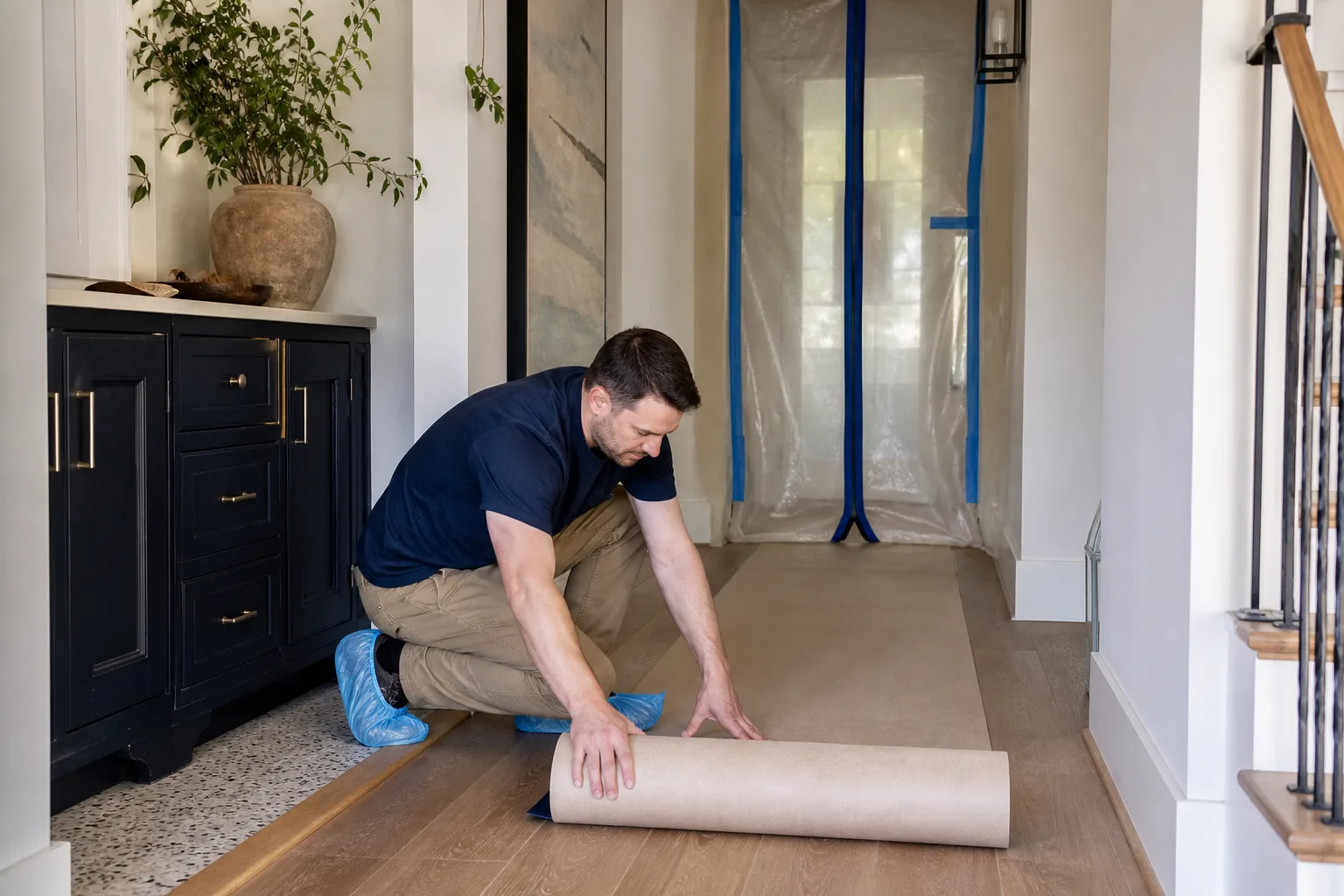
- Protected work areas. The contractor uses floor protection, dust barriers, and covers for your furniture and HVAC vents. Fort Lauderdale homes with central air conditioning need vent covers during drywall and sanding work, or the dust gets pulled into the system and spread through the whole house.
The Poorly Managed Site
- Trash accumulation. Job site debris that has not been removed in a week or more. In Florida heat, food containers and drink cans left on site attract pests, and construction debris mixed with household trash is a sign that nothing is being managed.
- Uncovered materials exposed to weather. Plywood, drywall, or bags of mortar sitting out in the rain. This is not a small oversight. Water-damaged materials installed behind walls or under tile become warranty problems, mold problems, and code failures.
- No visible permit. If you cannot find the posted permit on a permitted job, that is a red flag on its own.
- Rotating strangers. Different people show up every few days, nobody knows who is in charge, and you are learning names for the first time three weeks into the job. This is the opposite of the named-crew standard we hold at Mason Remodeling Co Fort Lauderdale: every crew member is background-checked, identity-verified, and introduced to you by name and photo before the work begins.
A single issue from the poorly managed list does not mean your project is doomed. But three or more of these signs together tell you the contractor’s attention is elsewhere, and you should start documenting and asking questions before the problems compound.
The Broward County Permit Status Check Every Homeowner Should Run Mid-Project
Most Fort Lauderdale homeowners check that a permit was pulled before work starts, and then never look at the permit again. That is a mistake, because the permit record is the single most reliable third-party source of truth about how a project is actually progressing. When an inspector visits, the result goes into the county’s system. When an inspection is scheduled, the schedule is visible. A contractor who is moving slower than promised cannot hide that from the permit portal.
Here is how to check your permit status mid-project, step by step:
- Get your permit number. It is on the permit card posted at the job site and on the paperwork you received when the permit was issued. If you do not have it, the contractor is required to provide it.
- Go to the Broward County ePermits portal. Broward County maintains an online permit search system where you can look up permits by address, permit number, or parcel ID.
- Enter your address or permit number. The system will show the permit history for your property, including any open permits for work in progress.
- Look at the inspection schedule and results. Each required inspection has a status: scheduled, passed, failed, or not yet requested. Inspections that were failed and not re-scheduled are a serious warning sign. Inspections that have not been requested at all when the contractor says the work phase is complete are an even bigger one.
- Compare the portal record to what the contractor tells you. If the contractor says the electrical rough-in passed yesterday but the portal shows no inspection scheduled, that is a discrepancy you need to address in writing.
The key timing check is this: after each major phase of work, an inspection should follow within days, not weeks. In Fort Lauderdale, inspection scheduling moves reasonably quickly for single-family residential work. A contractor who stalls on scheduling inspections is not just delaying your project, they are preventing the independent verification that the work meets Florida Building Code. That verification is your protection. Without it, a problem hidden behind drywall can go undiscovered for years, and by then the contractor is long gone and your warranty has expired.
Fort Lauderdale’s Post-Storm Contractor Surge: The Warning Signs That Follow a Hurricane
Fort Lauderdale gets hit with a predictable cycle after every hurricane season: out-of-state contractors flood the market, follow the insurance checks, and disappear before the work is finished. The pattern is so consistent that local building departments and insurance adjusters warn homeowners about it every year. The specific warning signs are easy to spot if you know what to look for, and they are not the same as the general contractor red flags you might already know.
The Post-Storm Warning Signs
- Out-of-state license plates on work vehicles. A legitimate contractor serving Fort Lauderdale has a local presence: a local office address, local crews, and vehicles registered in Florida. Out-of-state plates on a contractor who claims to be local are a contradiction.
- No local office address. The contractor gives a P.O. box, a virtual office, or an address that turns out to be a UPS store. A real remodeling company in Fort Lauderdale has a physical location where you can find them when something goes wrong.
- Pressure to waive permitting “to move faster.” This is the single most dangerous thing a post-storm contractor can say. Permitting exists to protect you. A contractor who wants to skip it is not trying to help you; they are trying to avoid the inspections that would catch their shortcuts. In Fort Lauderdale, unpermitted work can also complicate your home insurance and hurt your resale value, because the work was never verified as code-compliant.
- Insurance check assignment demands. A contractor who asks you to sign over your insurance check directly to them, or who offers to “handle everything with your insurer,” is positioning themselves to get paid before the work is done. Once the check is signed over, your leverage is gone.
- Cash-only or large upfront payment demands. Florida law limits deposits for residential construction work. A contractor who asks for 50 percent or more upfront, or who wants cash instead of a check, is either not licensed or not solvent.
The reason these signs matter so much after a storm is that the surge of work attracts contractors who would never be competitive in a normal Fort Lauderdale market. They rely on desperate homeowners, tight insurance timelines, and the sheer volume of demand. The homeowners who get burned are the ones who skipped the same verification they would have done before the storm because they felt pressure to move fast. The verification does not change because the circumstances are urgent. If anything, it matters more.
How to Document Concerns in Writing Without Escalating to Conflict
When a project starts showing warning signs, most homeowners do one of two things: they ignore the problem hoping it resolves, or they call the contractor angry and the relationship deteriorates. Neither approach protects your legal position under Florida’s construction lien law. Florida Statutes Chapter 713 gives homeowners specific rights and obligations when it comes to construction liens, and how you communicate with your contractor can affect those rights if a dispute escalates. The goal is not to build a legal case from day one. The goal is to create a written record that makes the contractor take you seriously, and that protects you if the project goes sideways.
Here is a documentation framework that works without turning a fixable problem into a fight:
- Put every concern in writing, even the small ones. A text message or email that says “Per our conversation, I understand the tile delivery is delayed until March 12 and the install will start March 14” is a document. A phone call is not. Written records are what a judge, an arbitrator, or a lien examiner will look at.
- Use neutral, factual language. “The inspection for the rough-in plumbing has not been scheduled as of today. The contract says it should have been done by February 28. Can you confirm the new date?” is effective. “You never do what you say” escalates. One creates a record. The other creates a conflict.
- Confirm verbal commitments in writing. After any conversation where the contractor promises something, send a brief email or text confirming what was said. If the contractor does not correct it, the confirmation stands as the record.
- Photograph everything. Job site conditions, material deliveries, work in progress, and any concerns you have. Photos are dated automatically on every smartphone. In a construction dispute, dated photos are often the most persuasive evidence because they cannot be argued with.
- Keep the contract, change orders, payment receipts, and permit documents in one place. If a dispute arises, you will need all of them. Scattered documents mean a weaker position. It takes ten minutes to set up a folder, and it saves hours of stress if things go wrong.
- Contact a Florida construction attorney before withholding payment. Withholding payment without legal advice can put you in breach of contract and expose you to a lien. There are legitimate reasons to withhold payment, but they depend on the specific contract terms and Florida law. Pay for an hour of an attorney’s time before you make that move.
None of this requires being confrontational. The most effective communication with a contractor is calm, specific, and written. It signals that you are paying attention and that you know your rights without needing to say either of those things out loud.
Material and Subcontractor Swaps: The Quiet Warning Signs
Two of the least-discussed warning signs in construction are material substitutions and unannounced subcontractor changes. They are quiet because they do not look like problems at first. The contractor has a reasonable explanation: supply chain delays, a better product, a sub who had a scheduling conflict. But both of these substitutions change what you are paying for, and both should trigger a written confirmation of the change and any price adjustment.
Material Downgrades
Every remodeling contract should specify materials by brand and model, not just by category. “KraftMaid cabinets” is a specification. “New cabinets” is not. “Silestone quartz countertops” is a specification. “Stone counters” is not. The reason this matters is that brand names carry performance and warranty differences that generic descriptions hide. A Therma-Tru exterior door and a no-name door from a big-box store are not equivalent, even if they look similar in a photo.
When a contractor shows up with different materials than the contract specified, the appropriate response is not to accept or reject immediately. It is to ask for the change in writing, with the specific product names for both the original and the substitute, the reason for the substitution, and any price adjustment. If the substitute is truly equivalent or better, the contractor will provide the documentation. If the substitute is a downgrade dressed up as an upgrade, the request for documentation usually makes the issue disappear.
Subcontractor Changes
Most general contractors use subcontractors for specialized trades: electrical, plumbing, HVAC, tile, drywall. The contract should name the subcontractors or at least specify their qualifications. When a subcontractor changes mid-project without notice, the most common reason is that the original sub stopped working for the contractor, usually because they were not being paid. That is a strong signal that the contractor is having cash flow problems.
The right response is to ask three questions in writing: Who is the new subcontractor? What are their license and insurance details? Why did the original sub leave the job? A contractor running a healthy business will answer all three without hesitation. A contractor who gets defensive or vague is telling you something you need to hear.
Reading the Payment Schedule as a Warning System
A well-structured payment schedule is a warning system disguised as paperwork. It ties payments to completed, inspectable milestones rather than to calendar dates, and that structure protects the homeowner in ways that most people do not think about until something goes wrong. In Fort Lauderdale, where the state’s construction lien law gives contractors significant power to place liens on property, the payment schedule is your primary defense against paying for work that has not been done.
The schedule should look something like this for a typical bathroom or whole-home remodel:
- Initial deposit: 10 to 15 percent at contract signing, no more. Florida law limits deposits to 10 percent for residential work unless the contractor can prove actual costs, so a demand for more should stop you immediately.
- Demolition complete: first progress payment.
- Rough-in inspections passed (electrical, plumbing, framing): second progress payment. Note that the payment is tied to the inspections passing, not just the work being done.
- Drywall and finishes complete: third progress payment.
- Final inspection passed: final payment, usually 5 to 10 percent held back until this point.
When a contractor asks for a payment before the tied milestone is actually complete, that is one of the clearest warning signs that they are cash-flowing your job against another project. The money from your job is being used to buy materials or pay crews on someone else’s job, and they are trying to pull your next payment forward to cover the gap. The answer is simple: the payment schedule exists to protect both parties, and you will pay when the milestone is verified, not before. At Mason Remodeling Co Fort Lauderdale, our policy is a written price before any work starts, on every project, every time, and payments tied to verified milestones. That is how a General Contractor in Fort Lauderdale should operate on every job, no exceptions.
Common Mistakes to Avoid
- Checking the permit once and never again. The Broward County permit portal is where inspection results live. Homeowners who check it weekly catch problems weeks earlier than those who check once at the start. A monthly five-minute check is the cheapest insurance you can buy on a construction project.
- Accepting verbal change orders. If the contractor says the new scope costs $4,000 more, get it in writing with the specific scope change and the specific price before the work happens. Verbal change orders are a leading cause of end-of-project billing disputes in Fort Lauderdale.
- Paying for work before the tied inspection passes. The inspection is not a bureaucratic formality. It is the independent verification that the work was done correctly. Paying before the inspection passes means paying for work that might have to be torn out and redone.
- Ignoring the urge to document because it feels confrontational. Sending a confirmation email is not confrontational. It is professional. Every legitimate contractor is accustomed to written confirmations because they rely on them to manage their own scope and protect against scope creep.
- Assuming a licensed contractor cannot have cash flow problems. Licensing verifies that the contractor meets certain minimum standards at the time of licensing. It does not verify that their business is currently solvent. The warning signs in this guide are how you spot the difference.
- Skipping the lien release requirement. Before making final payment, require the contractor to provide lien waivers or releases from all subcontractors and suppliers. Under Florida law, a sub or supplier who was not paid can place a lien on your property even if you paid the general contractor in full. A lien release proves everyone got paid.
When to Call a Professional
Some warning signs are worth addressing yourself with documentation and direct conversations. Others mean it is time to bring in reinforcements. If you have caught a contractor substituting materials after you objected in writing, if the permit portal shows missed or failed inspections that were never re-scheduled, or if the contractor has been unreachable for more than a week with no explanation, you should consult a Florida construction attorney before taking any further action. The same applies if you receive a Notice of Commencement or any lien-related document that you do not fully understand. Paying for an hour of legal advice costs a fraction of what it costs to unwind a lien or redo substandard work.
If you are at the beginning of a project and you want to avoid these problems from the outset, Mason Remodeling Co Fort Lauderdale offers free estimates for home remodeling in Fort Lauderdale and bathroom remodeling in Fort Lauderdale. We put the price in writing before any work starts, every crew member is background-checked and introduced by name and photo, and every completed project carries a written guarantee with clearly stated terms. Call (754) 354-3720 to schedule your free estimate.
Frequently Asked Questions
The most commonly missed warning sign is a contractor going unreachable for 72 hours or more mid-project, especially when inspections are pending. Homeowners tend to rationalize the silence as the contractor being busy, but paired with inspection delays on the Broward County permit portal, it almost always indicates the contractor is cash-flowing your job against another project. If your contractor has gone silent for three days and the portal shows no inspection activity, document the silence in writing and ask for a specific schedule. Call (754) 354-3720 if you want a free estimate from a contractor that answers the phone around the clock.
You can check inspection scheduling and results directly on the Broward County ePermits portal by searching your permit number or address. Every scheduled, passed, or failed inspection is recorded there. Compare what the portal shows against what your contractor tells you: if the contractor says an inspection passed but the portal shows no record, that is a discrepancy you need to address in writing immediately. You can call (754) 354-3720 to ask us about how our permitting process works and how we keep homeowners informed at every inspection point.
If the contractor substitutes materials that were specified by brand and model in the contract, request the change in writing with the specific product names for both the original and substitute, the reason, and any price adjustment. Legitimate substitutions happen, but they should never be unilateral. A contractor who cannot document the substitution and justify it is usually trading down to protect their own margin at your expense. Call (754) 354-3720 to talk through what a properly specified contract looks like before you sign.
Storm-surge contractors pressure homeowners to skip permits because unpermitted work skips the independent inspections that would catch code violations and substandard work. In Fort Lauderdale, unpermitted construction also creates problems with your home insurance and future resale because the work was never verified as code-compliant. Never waive permitting to move faster. Any legitimate contractor can get permits through Broward County, and if a contractor suggests skipping them, that is a disqualifying warning sign on its own. Call (754) 354-3720 for an honest conversation about what your project needs.
Florida law limits deposits for residential construction work to 10 percent of the contract price unless the contractor demonstrates actual costs that justify more. A demand for a larger upfront payment is a warning sign. Beyond the deposit, payments should be tied to verified milestones: demolition complete, inspections passed, work phases finished. A contractor who asks for payments before the tied milestone is complete is trying to shift risk onto you. Call (754) 354-3720 to talk through a typical payment schedule for your project with no obligation.
If you suspect subs are not being paid, the first step is to require lien releases from every subcontractor and supplier before making any further payments. Under Florida’s construction lien law, an unpaid sub or supplier can place a lien on your property even if you paid the general contractor in full. Request written confirmation from the contractor that all subs and suppliers on your job are current. If the documentation does not arrive, consult a Florida construction attorney before paying anything more. You can also call (754) 354-3720 to talk through how we document payment flows on every project we run.
The Bottom Line
The warning signs that sink construction projects in Fort Lauderdale are rarely the dramatic ones. They are quiet: the contractor who stops responding, the inspection that never gets scheduled, the material that shows up not matching the spec, the subcontractor who changes without notice. Each one is easy to explain away and each one compounds. The defense is not paranoia; it is routine. Check the permit portal weekly, put every change in writing, tie every payment to a verified milestone, and require lien releases before final payment. These habits take minutes and protect hundreds of thousands of dollars. And if you want to start with a contractor who builds these protections into the contract from the first day, call (754) 354-3720 for a free estimate.
Written by Isaac Pruett, Owner at Mason Remodeling Co Fort Lauderdale, serving Fort Lauderdale since 2004.
See the difference
 Before
 After
After Before
 After
After Before
 After
After