

Free written scope consultation - allowances, timeline, and change-order rules on paper before a single trade is scheduled
Sakrete Kitchen Remodeling: The Fort Lauderdale Owner’s Guide
Sakrete-compatible kitchen remodeling work in Fort Lauderdale typically runs $14,000 to $45,000 installed, depending on finishes and layout changes. We stock common Sakrete product lines and can usually schedule an on-site assessment the same week you call. Most homeowners realize something’s gone sideways when countertops start pulling from the wall, floor leveling compound cracks under tile, or a backsplash begins separating at the seam where it meets the counter.
Sakrete makes concrete mixes, levelers, mortars, and repair compounds. In a kitchen, their products typically show up under your flooring, behind your tile, or as the structural base for countertops. When that base fails in South Florida humidity, you notice it fast. Salt air, constant moisture, and homes built on shifting sandy soil all take a toll. We’ve pulled up floors in Victoria Park where the original Sakrete leveler had turned to powder under the tile because it was laid too thin years ago.
If you’re holding a Sakrete bag or dealing with a floor, counter, or tile base that’s failed, this page tells you what’s wrong, what it costs, and who you’ll have at your door. We’re an independent Fort Lauderdale contractor, not affiliated with Sakrete. But we work with their products regularly and know their quirks.
Which Sakrete Products This Applies To
In kitchen remodeling work, the Sakrete products we see most are self-leveling underlayment, floor patch, sand mix, mortar mix, and concrete resurfacer. Each behaves differently. Self-leveling underlayment is the one homeowners call us about most: it’s poured as a liquid, spreads flat, and hardens into a smooth base. If the pour is wrong or the subfloor flexes after installation, tile cracks within a year.
Sakrete Sand Mix is what’s used behind most tile shower bases and sometimes as a setting bed on kitchen floors. Mortar mix shows up in tile work and masonry repairs around the kitchen. Concrete resurfacer is less common inside but comes up when a kitchen sits on a slab foundation that’s spalled or pitted near the sink or dishwasher line.
Here’s the compatibility gotcha: Sakrete products are not one-size-fits-all. The Sand Mix that works for a floor setting bed is not the right product for a countertop base. We’ve seen owners use a floor patch compound to level a counter, only to watch it crack within weeks because it wasn’t meant to hold that kind of continuous load or face that much moisture. Check the bag for the product name, not just the Sakrete logo. That specification line is the difference between a base that lasts 20 years and one that fails in 18 months.
Styles & brands we work with


Signs Your Sakrete Base or Surface Is Failing
- Tile cracking in a straight line across the floor: This usually means the underlayment cracked underneath first. The Sakrete layer failed from subfloor movement, and the tile follows the same fracture path.
- Hollow-sounding spots when you tap the tile: The mortar bed or leveler has separated from the substrate. Those voids collect moisture, and in Fort Lauderdale’s humidity they don’t dry out. They grow.
- Countertop pulling away from the wall or dipping in the middle: The concrete or mortar base under the counter has compressed or cracked. You’ll see a widening caulk line at the backsplash first, then a visible sag.
- White efflorescence or dark staining at tile edges: Water is migrating through the concrete base and wicking up. This is a sign the base is saturated and starting to break down chemically.
- Grout cracking repeatedly after repairs: If you’ve regrouted once and it cracked again within months, the movement is coming from underneath, not from the grout itself.
See the difference
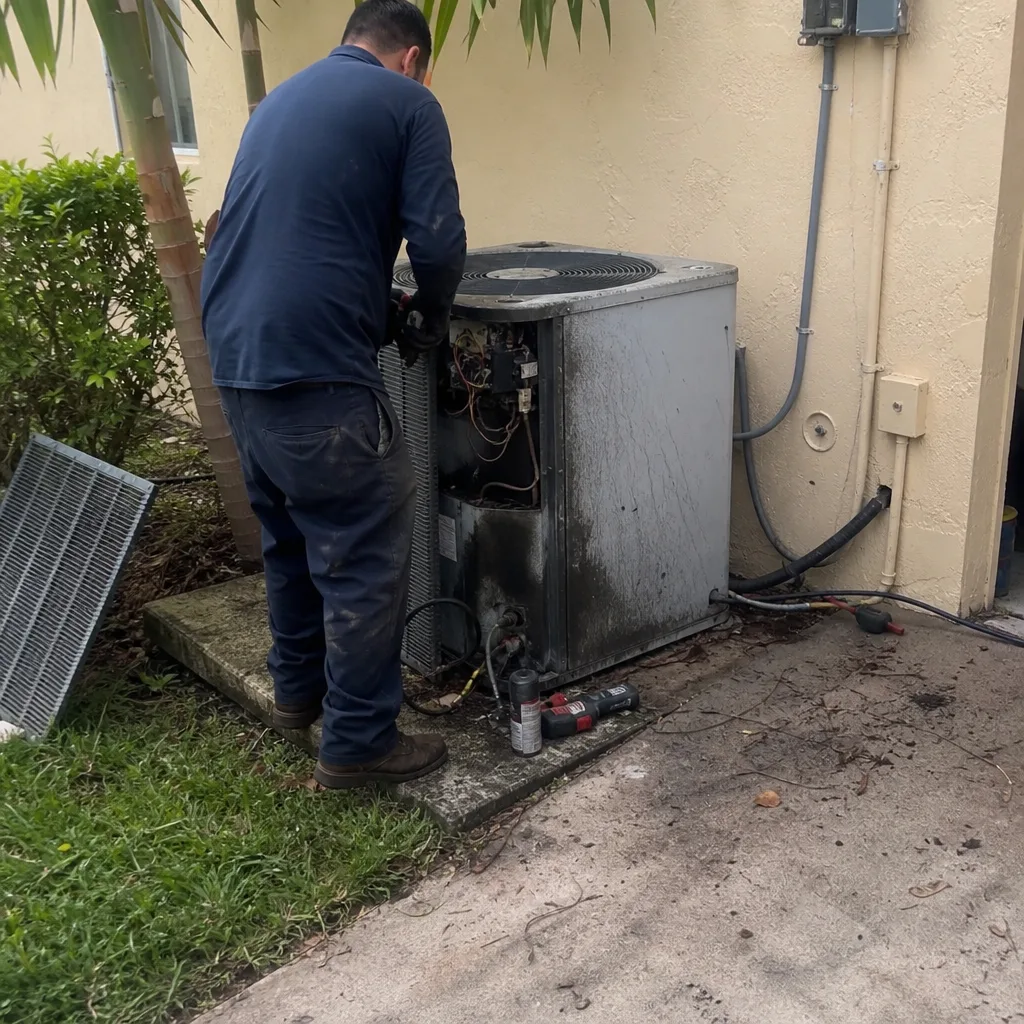 Before
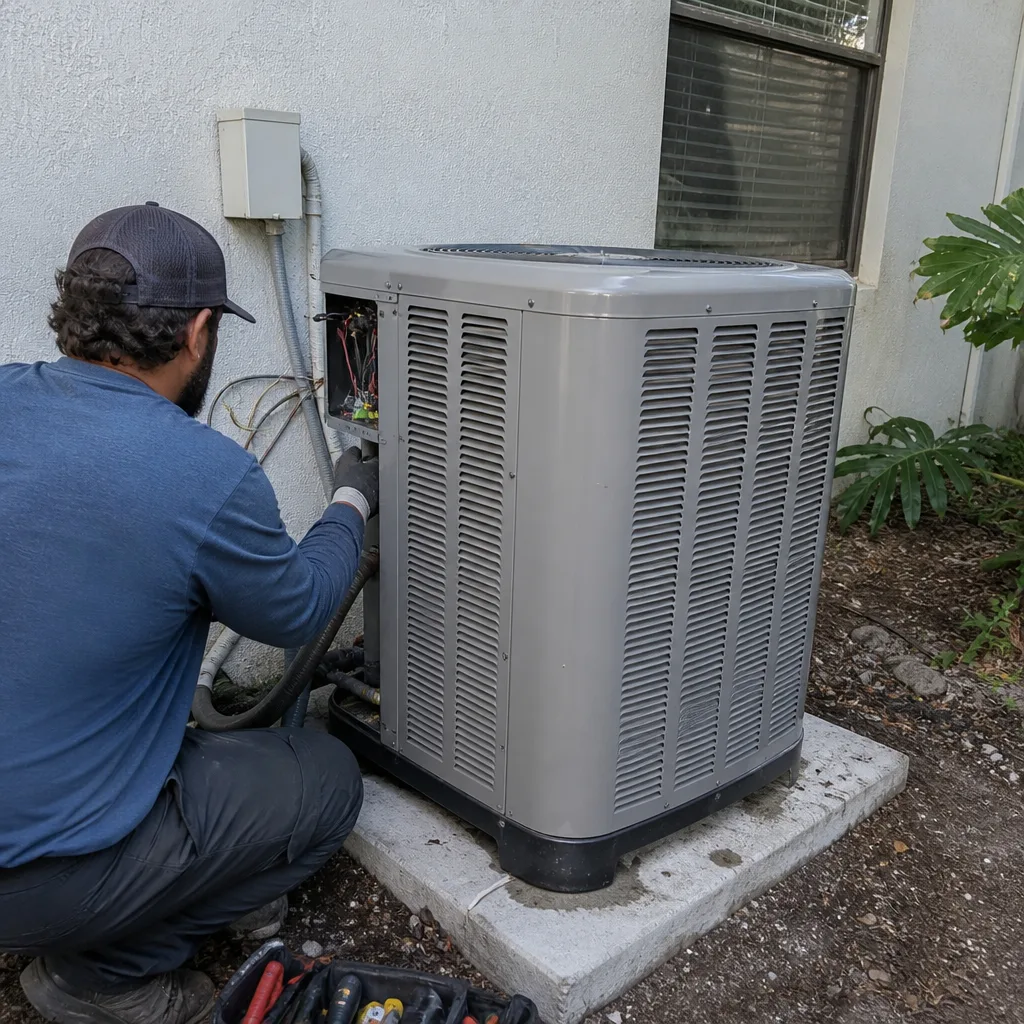 After
After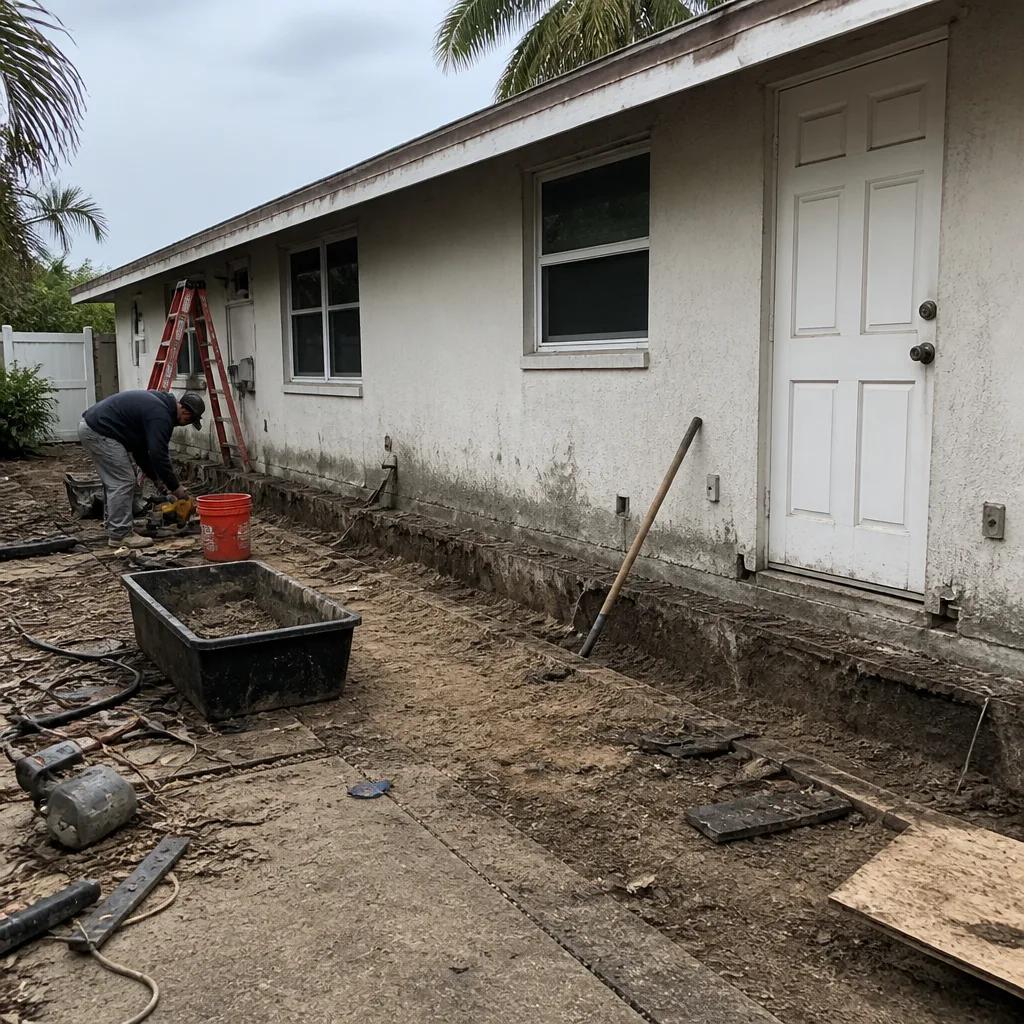 Before
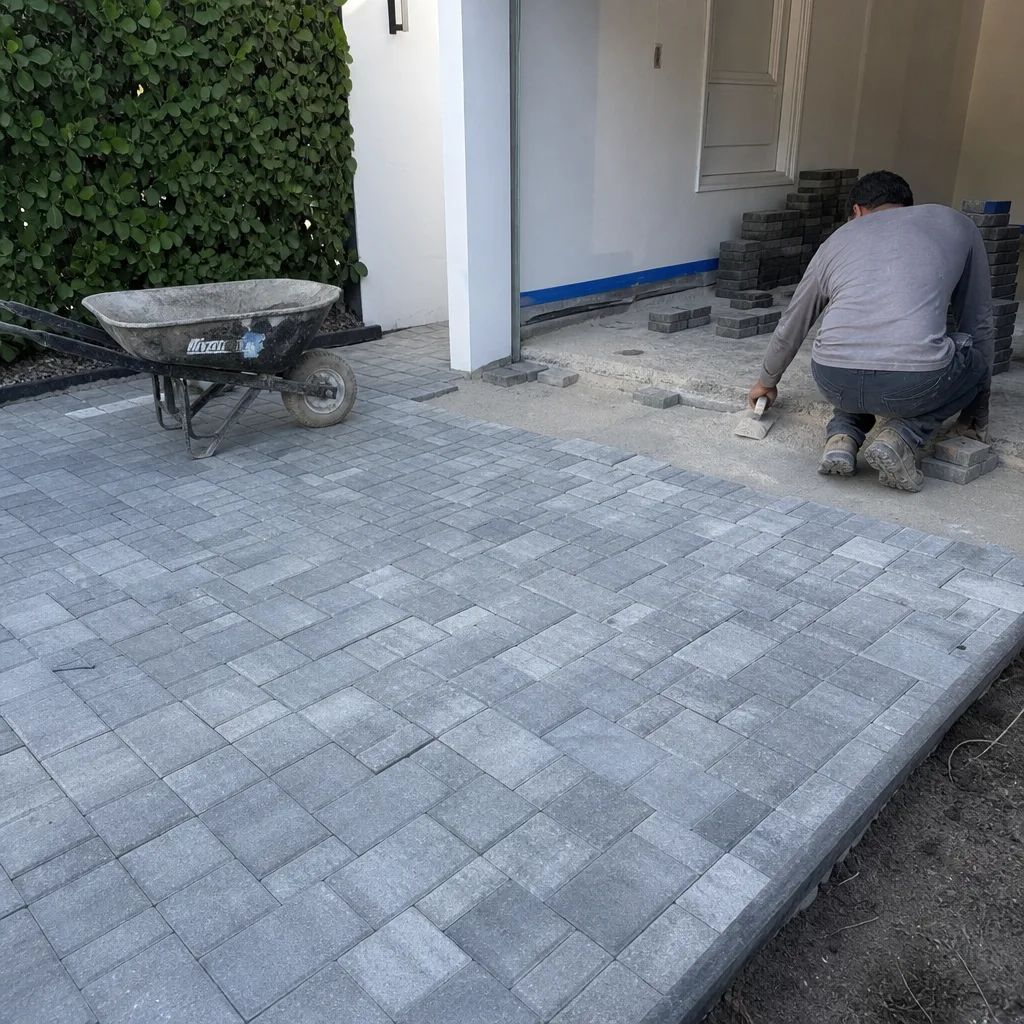 After
After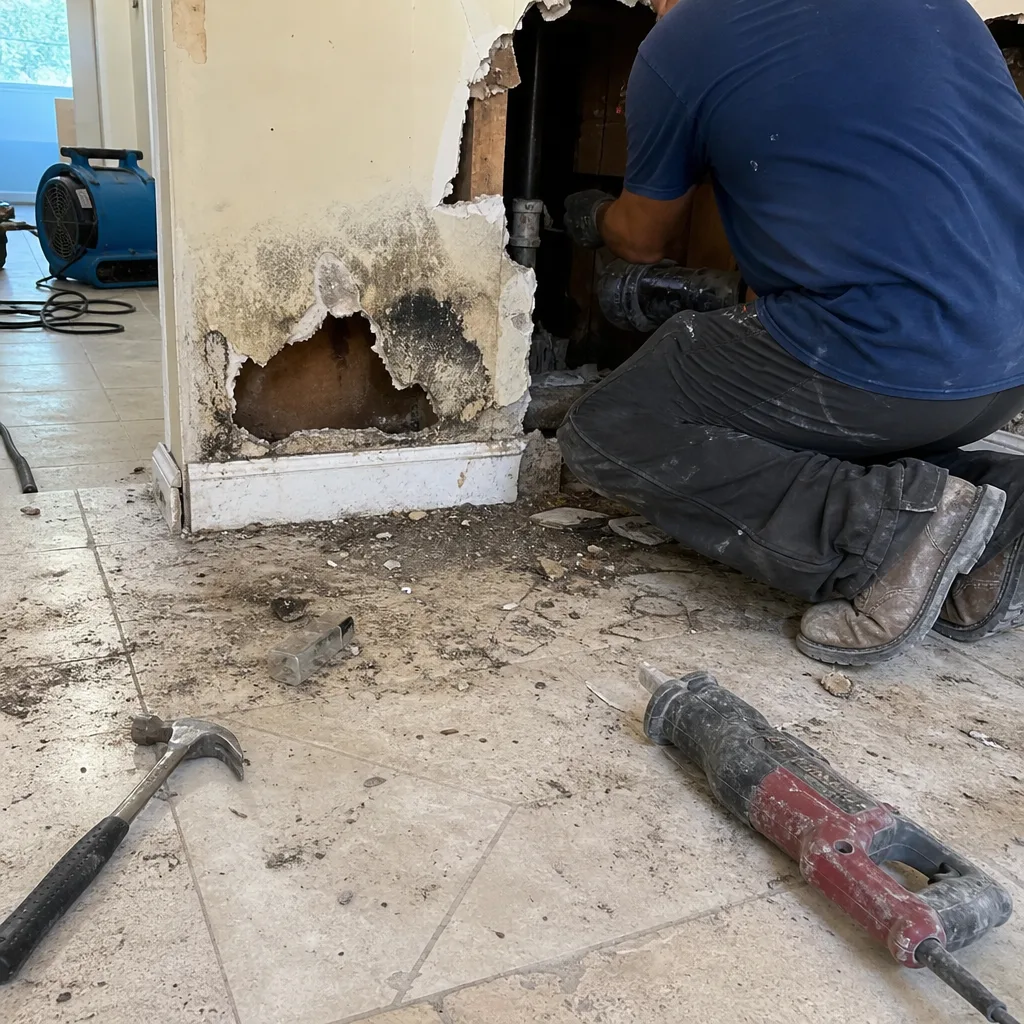 Before
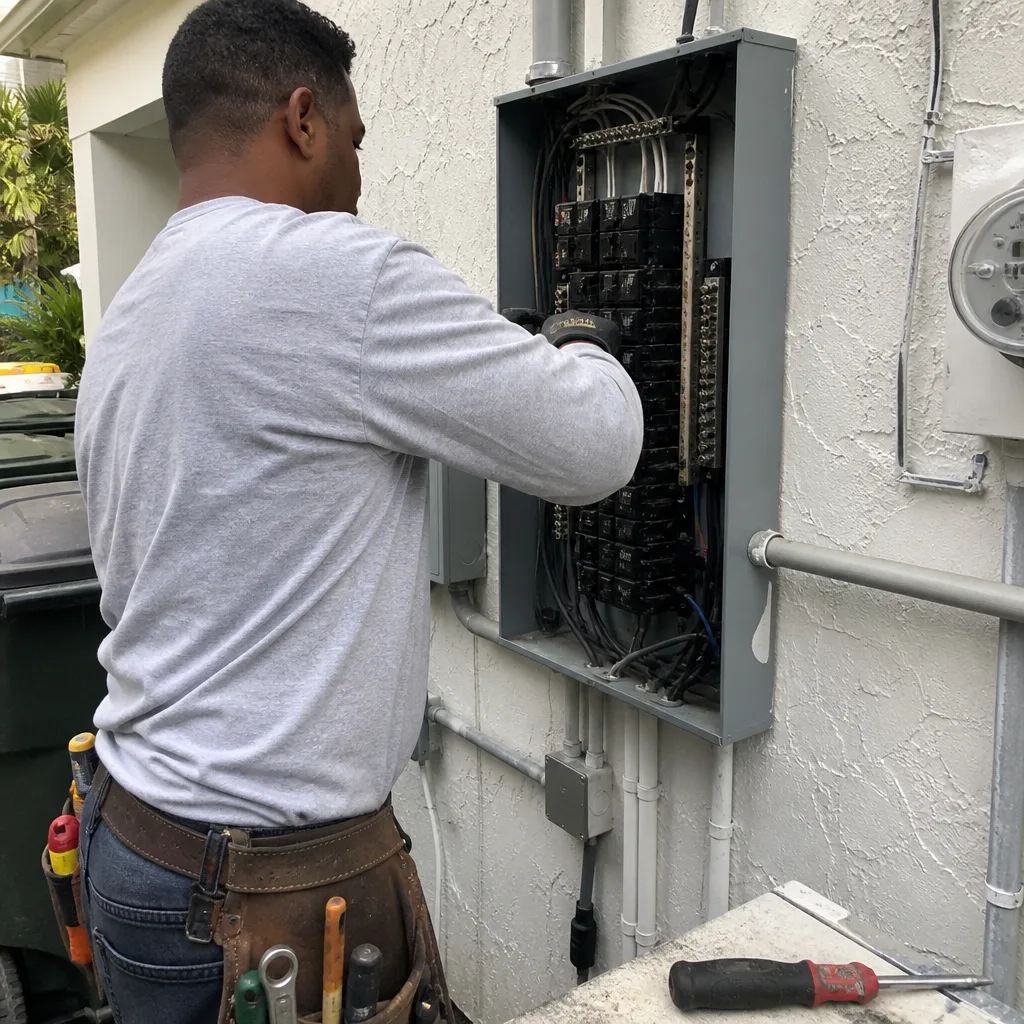 After
AfterReplacement Cost & What’s Included
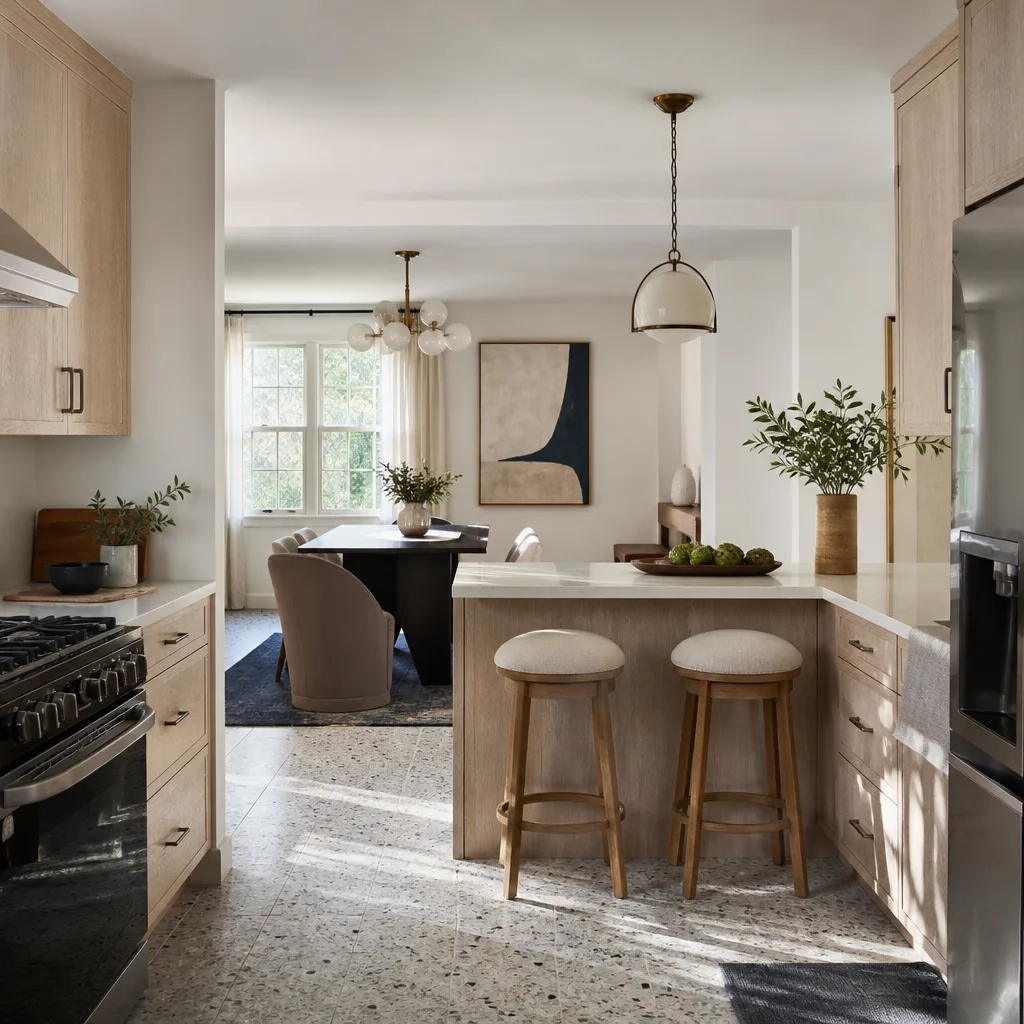
In Fort Lauderdale, a full kitchen remodel where we’re replacing failed Sakrete underlayment, rebuilding the floor, and installing cabinetry, countertops, and backsplash generally falls between $14,000 and $45,000. Smaller jobs that stay focused on the failing surface, like removing and re-pouring a floor base and retiling, typically land in the $9,000 to $20,000 range.
What drives the spread is what we find once we open the floor. If the subfloor is solid and the old Sakrete layer comes out clean, your cost stays near the bottom. If the subfloor has water damage or termite scarring, or the joists are undersized for tile deflection, we’re rebuilding structure first. You’ll get a written price before any work starts, and it lists every line item. The price doesn’t change unless the scope changes, and if it does, we tell you before we touch a thing. Every project carries a 365-Day Done Right Promise: if the work isn’t right within a year, we fix it at no cost.
DIY or Call Us?
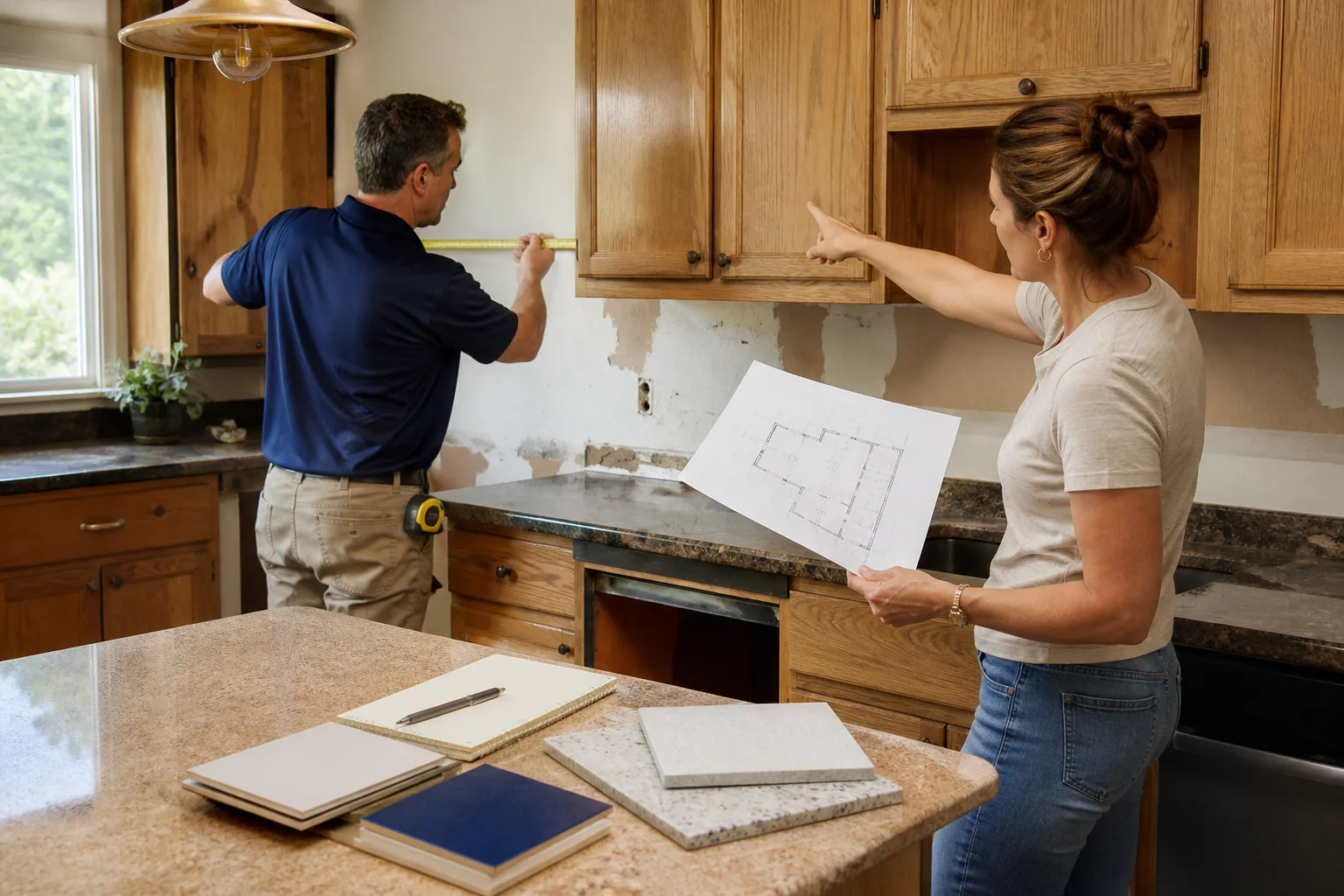
You can safely check a few things yourself: look for visible cracks in grout lines, tap tiles to find hollow spots, and check under the sink cabinet for water stains on the subfloor from the top side if it’s exposed. That gives us useful information before we arrive.
What I don’t recommend is pulling up tile and trying to re-level a kitchen floor with bag mix from the hardware store on a Saturday morning. Leveling a floor for tile needs a flatness tolerance you can’t eyeball. Mixing Sakrete self-leveler wrong, pouring it too cold, or skipping the primer coat means it bonds to nothing and fails again. And if it fails, you’re paying for removal and redo, which costs more than doing it correctly the first time. If you’re not sure, call (754) 354-3720 and talk it through. We’ll tell you what we found, what it takes to fix it, and what it will cost, before we touch a thing.
FAQs
A properly installed Sakrete underlayment should last 20 years or more, but in South Florida homes with high groundwater, older slab foundations, or poorly ventilated crawl spaces, we see failures in the 8 to 12 year range. The main killers are moisture intrusion and subfloor movement, not the product itself. If your floor failed early, the install or the substrate is usually the culprit. Call (754) 354-3720 and we’ll assess whether it’s a patch job or a full re-pour.
Sometimes. If the failure is localized, say a two-foot section near the dishwasher where water pooled, we can often cut out that section, patch it, and re-tile just that area. If the hollow spots run across the room, you’re looking at full removal and replacement. We won’t know for sure until we’re standing on it. Estimates are free.
For a typical Fort Lauderdale kitchen, expect 3 to 5 working days from demo to finished tile, assuming no structural repairs. If we’re also doing countertops and cabinetry, plan on 3 to 6 weeks for the full remodel.
We source Sakrete, KraftMaid, Cambria, and Silestone products through our supplier network and handle purchasing as part of your written quote. You won’t be running to the hardware store for bags of leveler. If you already bought materials, we’ll work with what’s on site as long as it’s the right spec for the job. Call (754) 354-3720 for a free estimate.
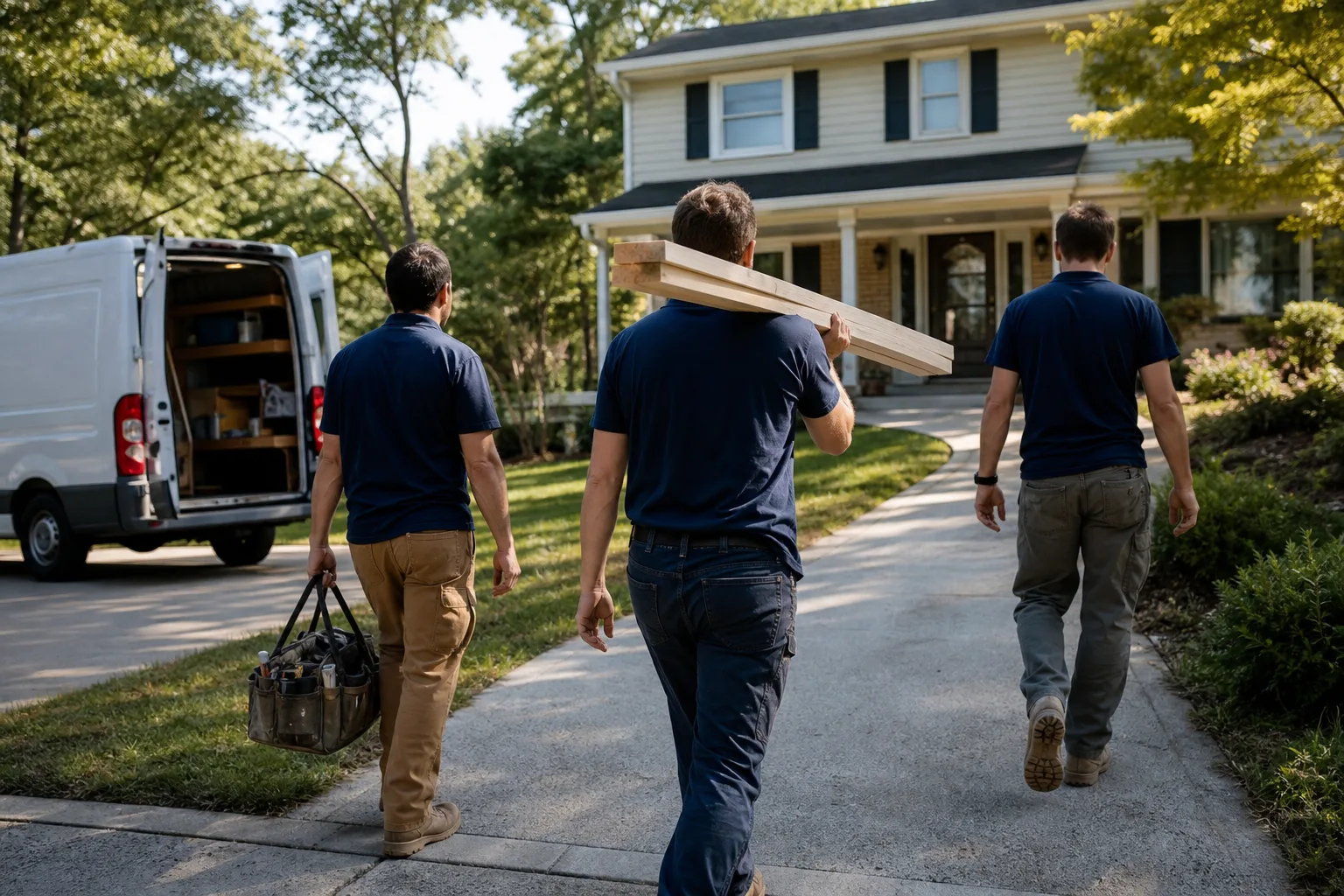
If you’re dealing with a failing kitchen floor, counter base, or tile surface in Fort Lauderdale, call Mason Remodeling Co Fort Lauderdale at (754) 354-3720. Isaac Pruett and our crew will come out, assess what failed, and put a written price in your hands before any work begins. A live person answers, day or night.
Written by Isaac Pruett, Owner, Mason Remodeling Co Fort Lauderdale at Mason Remodeling Co Fort Lauderdale, serving Fort Lauderdale and nearby areas.