Free written scope consultation - allowances, timeline, and change-order rules on paper before a single trade is scheduled
James Hardie Fence Installation: The Fort Lauderdale Owner’s Guide
James Hardie fence installation in Fort Lauderdale typically runs between $3,500 and $9,000 for a full replacement using fiber cement fence panels and posts. We stock James Hardie-compatible fence materials and can usually start your project within a week of the estimate. Most owners discover their fence has failed when a panel cracks at the post line or the bottom edge starts swelling after a heavy South Florida rain. The truth is, James Hardie fiber cement holds up better than wood in our humidity, but installation errors and ground contact will still take one down eventually.
Which James Hardie Models This Applies To
James Hardie makes fiber cement siding and trim, not fence panels by name. Most “James Hardie fence” projects in Fort Lauderdale are actually built using HardiePlank lap siding or HardiePanel vertical siding mounted to a framed fence structure. The panel dimensions matter: HardiePanel comes in 4×8 and 4×10 sheets at 5/16 inch thickness, while HardiePlank runs 5/16 inch thick in widths from 5.25 to 12 inches. If your fence was built with HardiePanel, you’ll see smooth sheets with a subtle wood-grain texture. If it used HardiePlank, the fence will have visible horizontal lap lines every 5 to 8 inches depending on exposure.
Here’s the compatibility gotcha most people miss: James Hardie fiber cement cannot sit directly on soil or concrete grade. The manufacturer requires a minimum 6-inch clearance from finished grade, which is why so many Fort Lauderdale fences fail at the bottom edge. Water wicks up, the board swells, and the paint delaminates within two or three years. When we replace a James Hardie fence, we set the bottom rail so every panel clears the ground by at least 6 inches, then install an aluminum or PVC bottom trim to close the visual gap without trapping moisture.
On the OEM-versus-aftermarket question: James Hardie does not sell pre-assembled fence kits, so there is no true “OEM fence panel.” Any contractor claiming to install “genuine James Hardie fencing” is using HardiePlank or HardiePanel in a custom fence assembly. We use genuine James Hardie material for the visible faces because the density and paint adhesion are consistent. For the internal framing, we use pressure-treated Southern yellow pine rated for ground contact, which is the right call for Fort Lauderdale’s wet season. Aftermarket fiber cement alternatives exist, but in our experience they delaminate faster in salt air than James Hardie product.
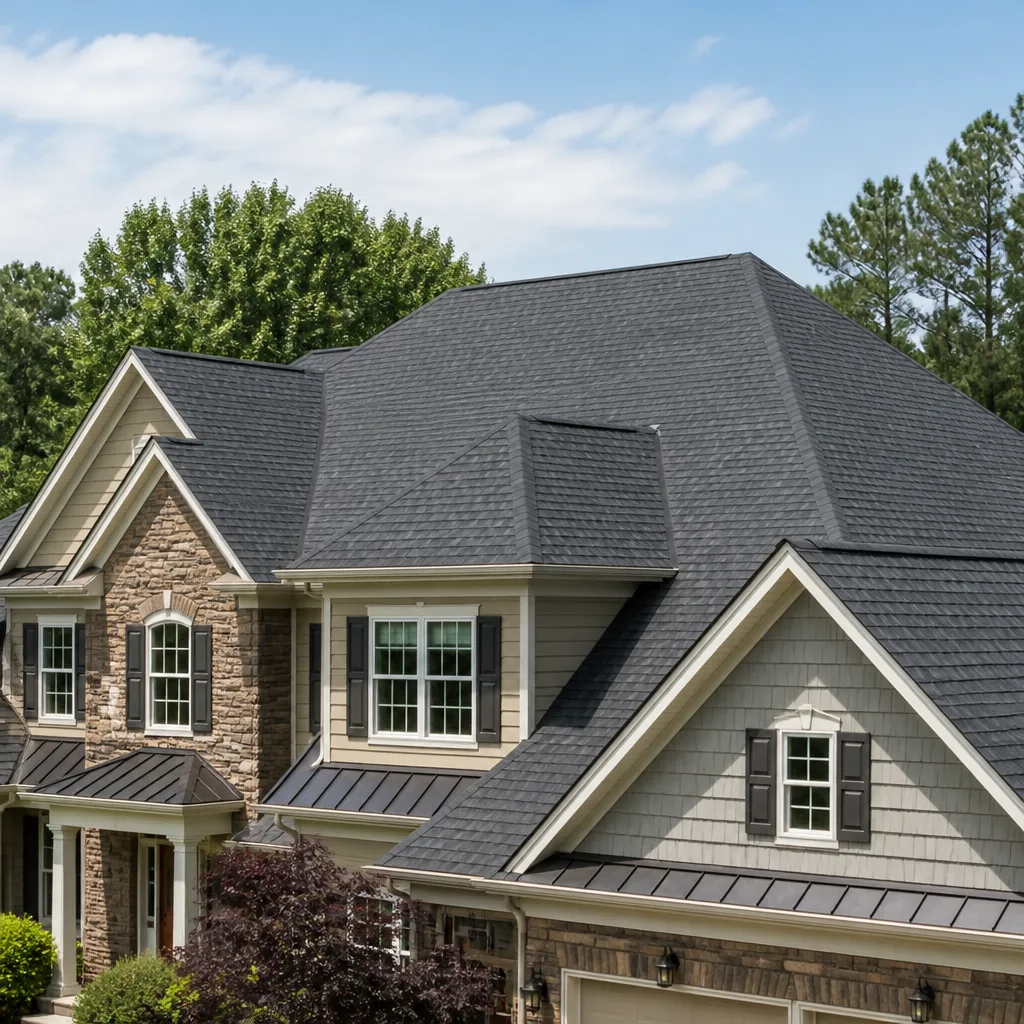
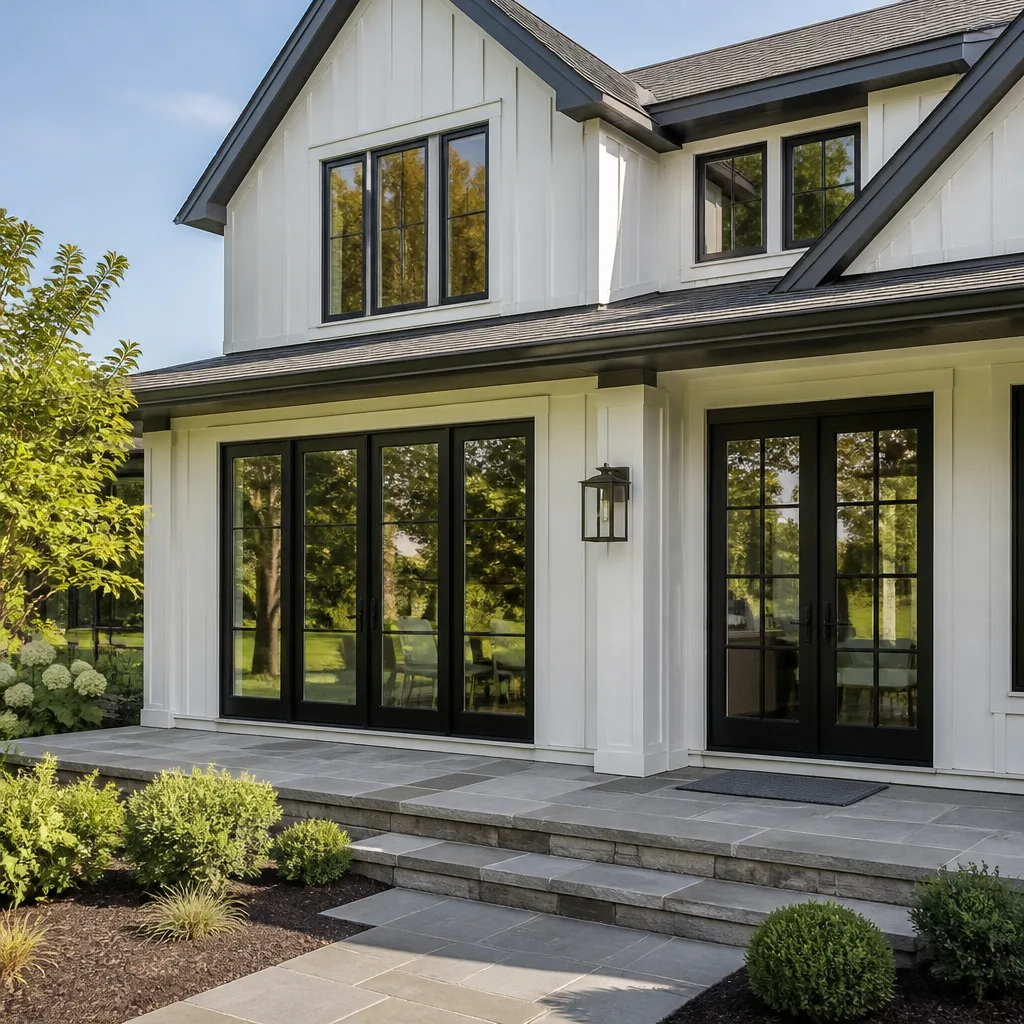
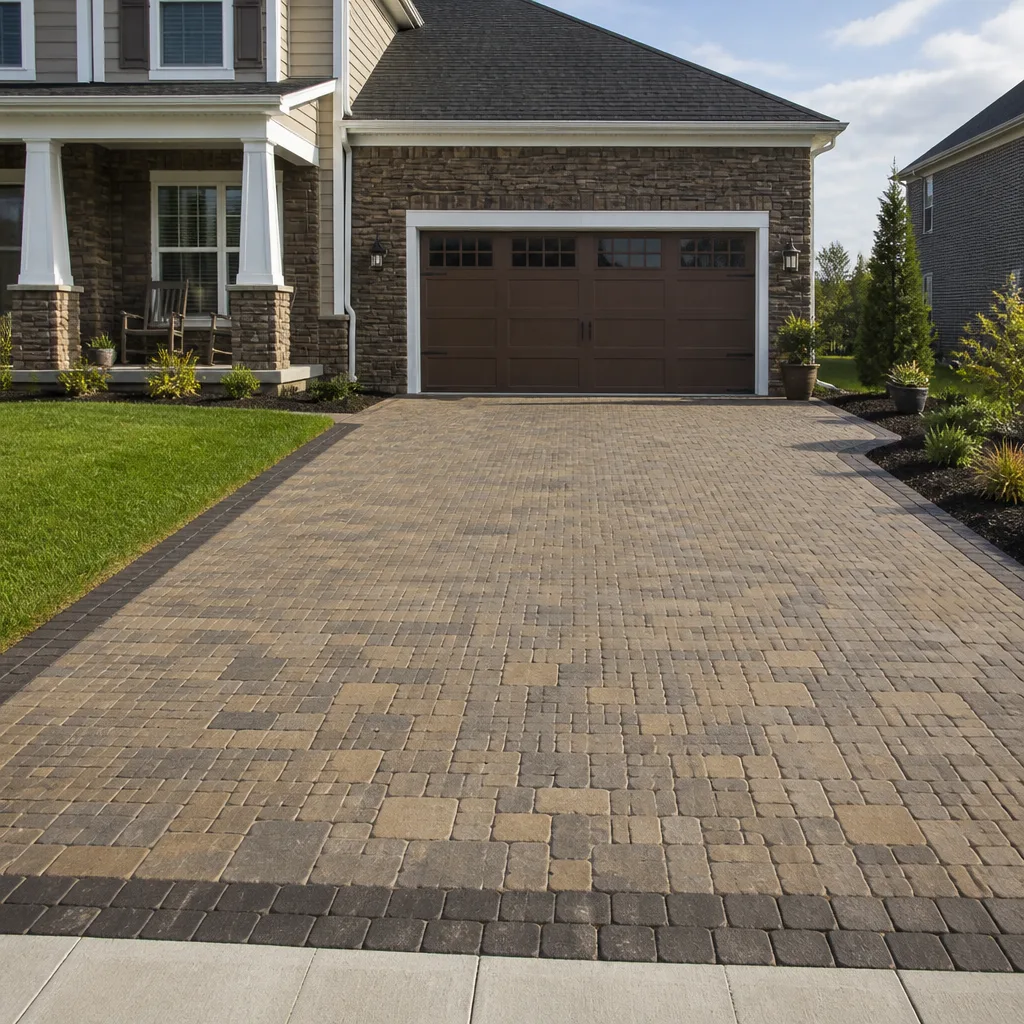
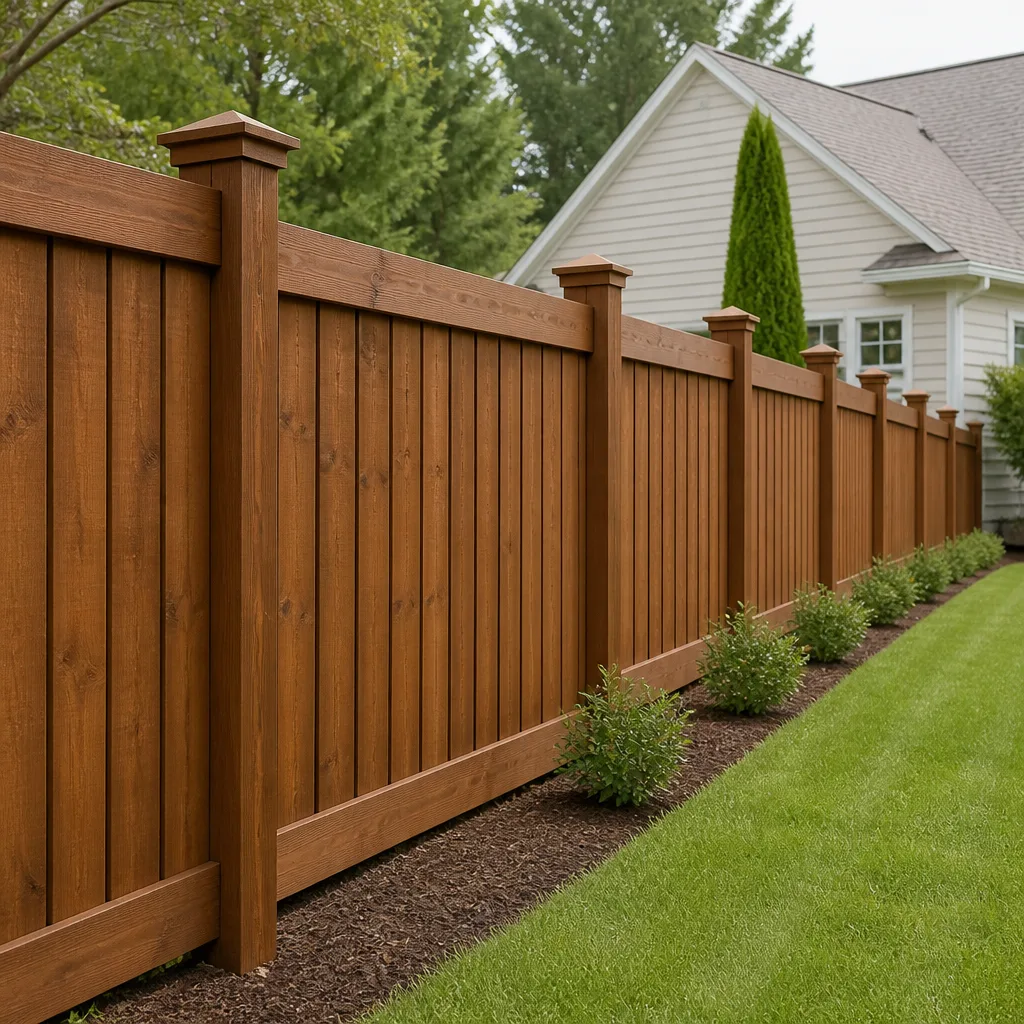
Styles & brands we work with
Signs Your James Hardie Fence Installation Is Failing
- Bottom-edge swelling and paint peeling within 2-3 years – This almost always means the original installer set panels too close to grade. Water wicks into the fiber cement core and breaks the paint bond from behind. Once swelling starts, the panel needs replacement, not repainting.
- Vertical cracks running through the middle of a panel – James Hardie panels are rigid, so any flex in the framing transfers directly to the board. A fence that was framed with 2×4 rails on 24-inch centers will sag and crack panels over time. We frame with 2×6 rails on 16-inch centers for this exact reason.
- Rust streaks below the fasteners – If the original crew used standard drywall screws or non-coated nails, the salt air in Fort Lauderdale will corrode them within a few seasons. Those rust streaks are permanent once they hit the paint.
- Panels pulling away from the top rail – This usually shows up after one good tropical storm. The fasteners were too short, or the rail itself has begun to twist. Left alone, the panel will eventually fall onto the neighbor’s side.
- Mold streaks down the face of the fence – Fiber cement holds moisture longer than wood, especially on the north side of a Fort Lauderdale yard where the sun never hits. If the fence was never sealed with a breathable masonry sealer, you’ll see black streaking within 18 months.
See the difference
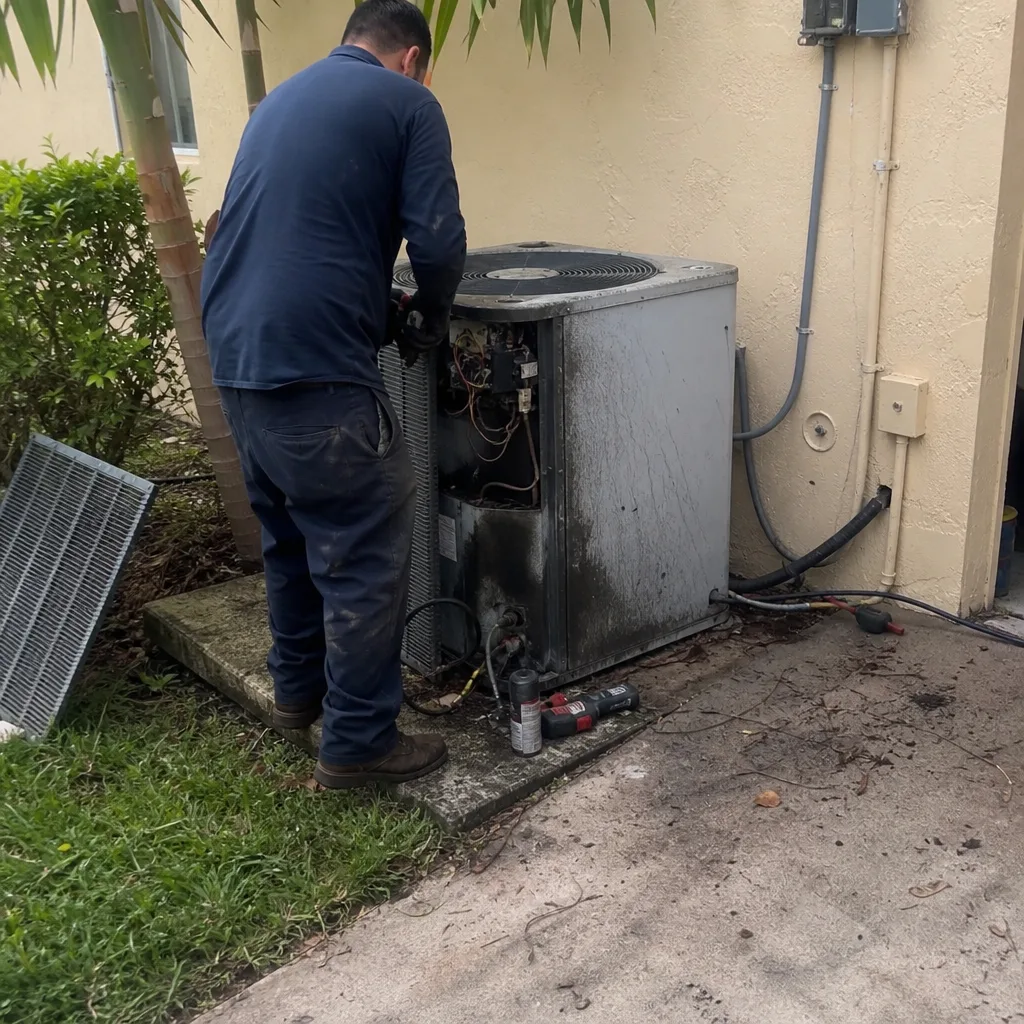 Before
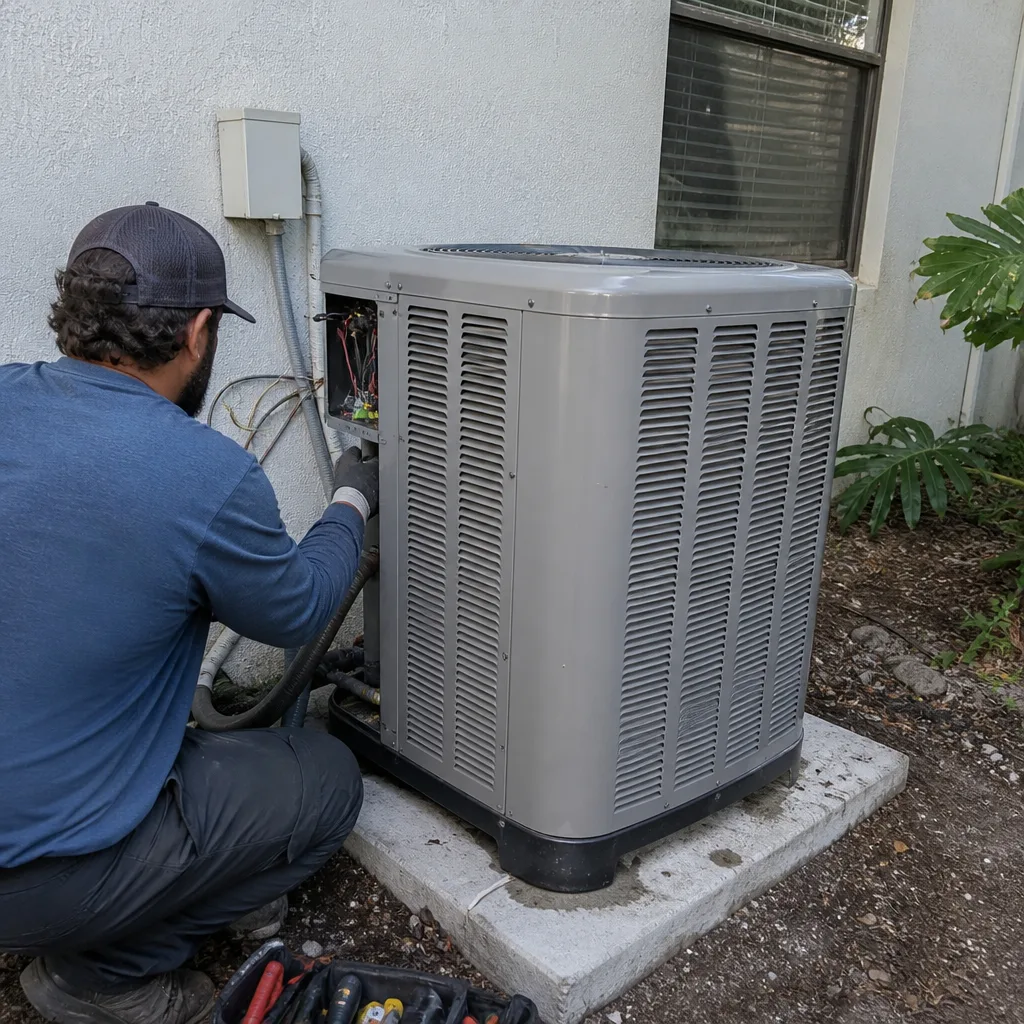 After
After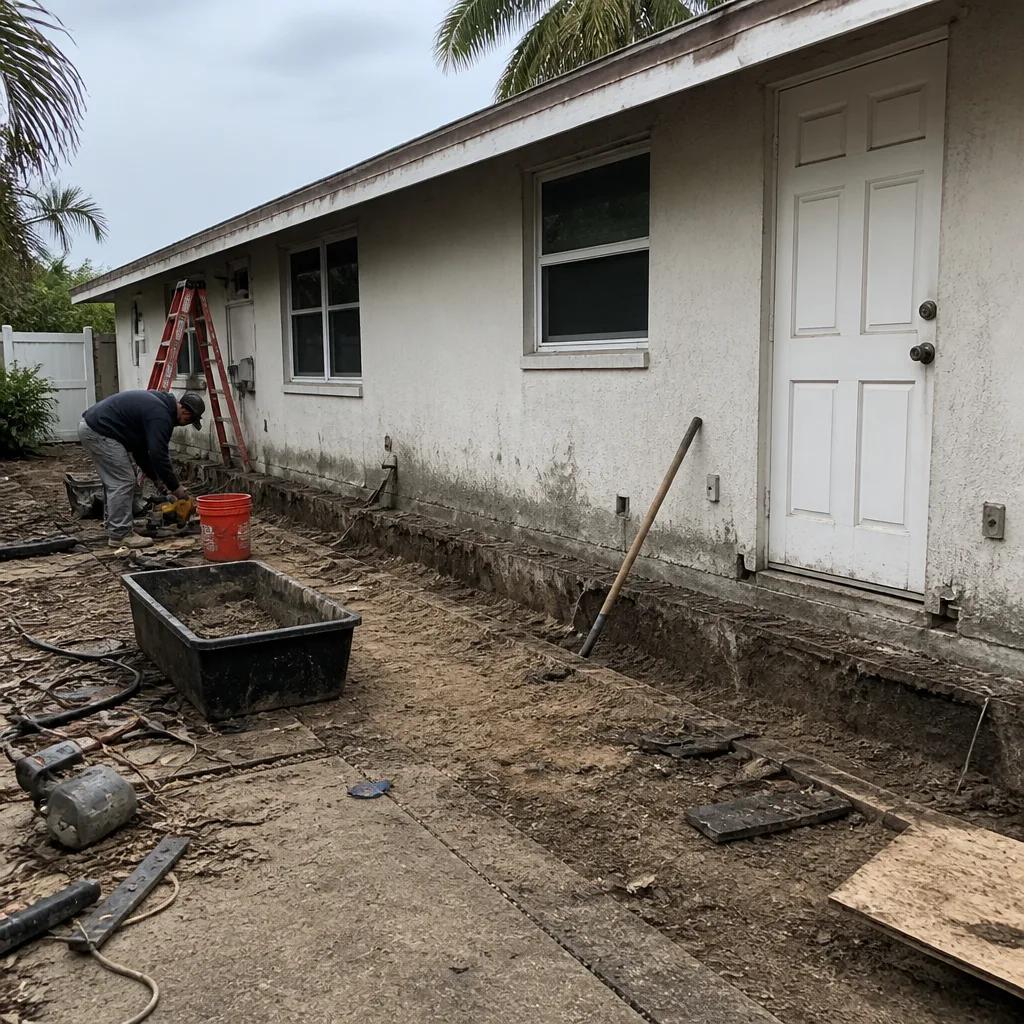 Before
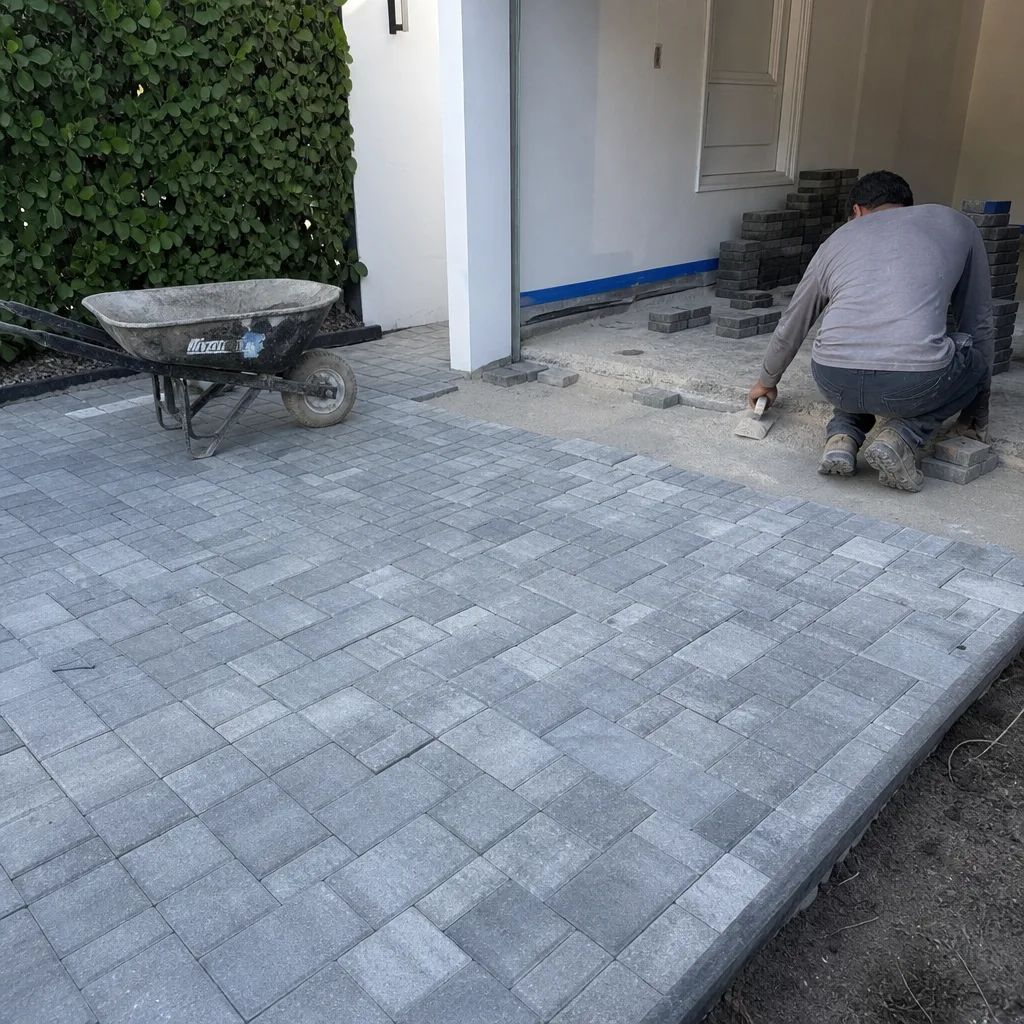 After
After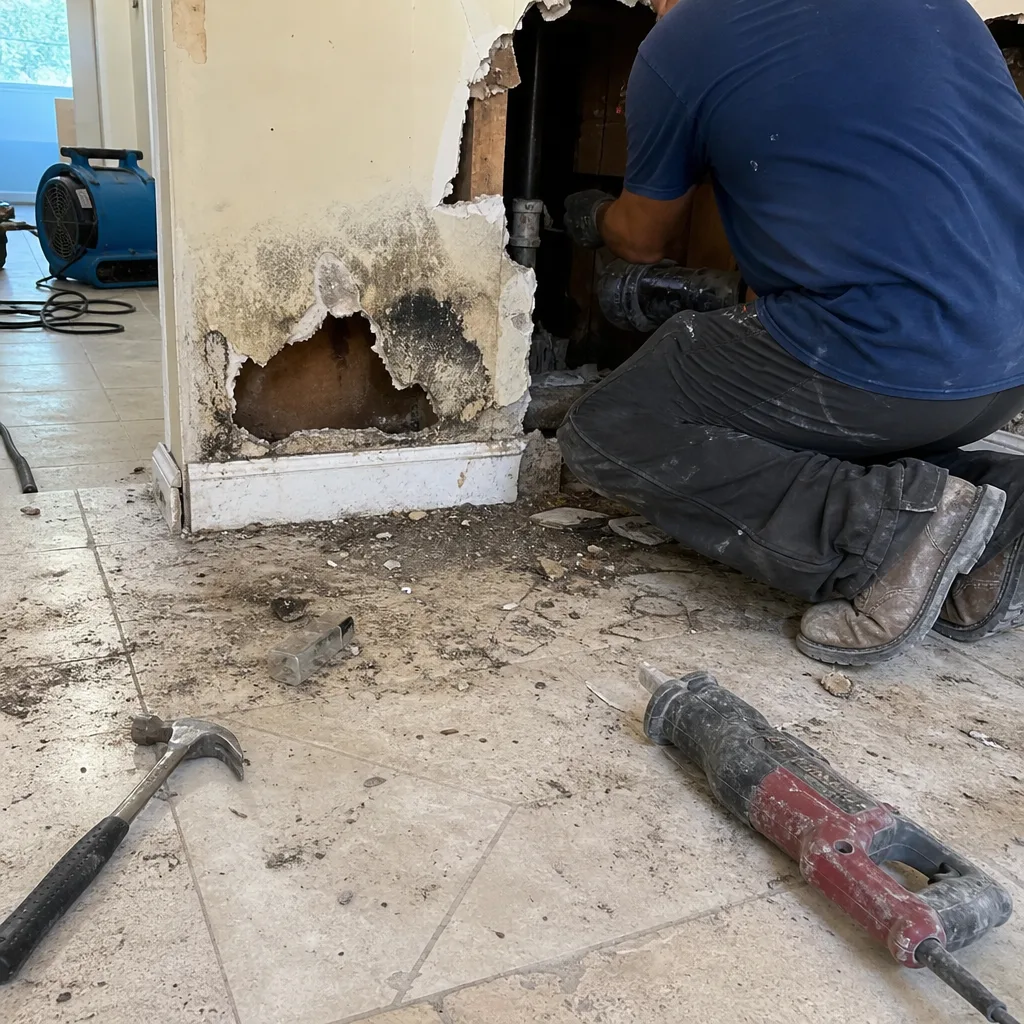 Before
 After
AfterReplacement Cost & What’s Included
For a standard 50-foot run of James Hardie fence in Fort Lauderdale, you’re looking at roughly $70 to $140 per linear foot installed, which is how we arrive at that $3,500 to $9,000 range. Variables that move the price: whether the existing posts can be reused (often they can’t in our soil), height of the fence, gate count, and whether we need to haul the old fence away or work around established landscaping.
| Line Item | Typical Range |
|---|---|
| James Hardie panel material (per 50-ft run) | $800 – $1,600 |
| Pressure-treated framing and posts | $600 – $1,200 |
| Labor (2-person crew, 2-3 days) | $1,200 – $2,800 |
| Old fence removal and disposal | $300 – $700 |
| Bottom trim and moisture barrier | $200 – $500 |
| Gate(s), if needed | $400 – $1,200 each |
Every James Hardie fence installation we do in Fort Lauderdale comes with a written price before we start, never a verbal estimate that creeps upward. The labor and materials are broken out line by line. If we find rotted framing or a post that needs more concrete than expected, we tell you what we found, what it takes to fix it, and what it will cost – before we touch a thing. The workmanship carries our 365-Day Done Right Promise: if something fails within a year of completion, we return and make it right at no charge.
DIY or Call Us?
Fiber cement is heavy – a single 4×8 HardiePanel sheet weighs about 75 pounds – and it’s brittle. Drop a sheet on its corner and it’s ruined. If you’re thinking about patching one cracked panel yourself, you’ll need a circular saw with a fiber cement blade, proper dust control, and two sets of hands. Fiber cement dust is silica, and you don’t want it in your lungs. That said, there are a few things you can check without touching a tool: look for panels touching the ground, check for corroded fasteners, and see if any rails have pulled loose. If the fence is leaning more than a few degrees, that’s a post problem, and digging a post out of Fort Lauderdale’s sandy limestone soil in July is not a Saturday project. Call (754) 354-3720 and we’ll give you an honest read on whether it’s a repair or a rebuild.
FAQs
A properly installed and sealed James Hardie fence will last 25 to 40 years in South Florida, with the main threat being bottom-edge moisture rather than the fiber cement itself. Call (754) 354-3720 if your fence is showing bottom-edge swelling before year five – that’s an installation issue, and we can tell you exactly what’s happening.
Yes, we can replace individual James Hardie panels and rails when the posts and remaining structure are sound, and we’ll tell you honestly if a section repair makes sense or if the framing underneath is too far gone. Call (754) 354-3720 and we’ll look at the fence in person before recommending a scope.
A standard 50-foot run with one gate takes our crew two to three working days in Fort Lauderdale, including demolition of the old fence, post setting, framing, panel installation, and sealing. Rain delays are a reality here, but we schedule around the forecast and keep the job site clean every evening.
We keep HardiePanel 4×8 sheets, HardiePlank lap siding, fiber cement blades, coated fasteners, and pressure-treated framing stock on hand for fence work, so we don’t need to wait on a special order to start your project. Call (754) 354-3720 for the exact material availability on your fence’s profile.
Written by Isaac Pruett, Owner, Mason Remodeling Co Fort Lauderdale at Mason Remodeling Co Fort Lauderdale, serving Fort Lauderdale and nearby areas.